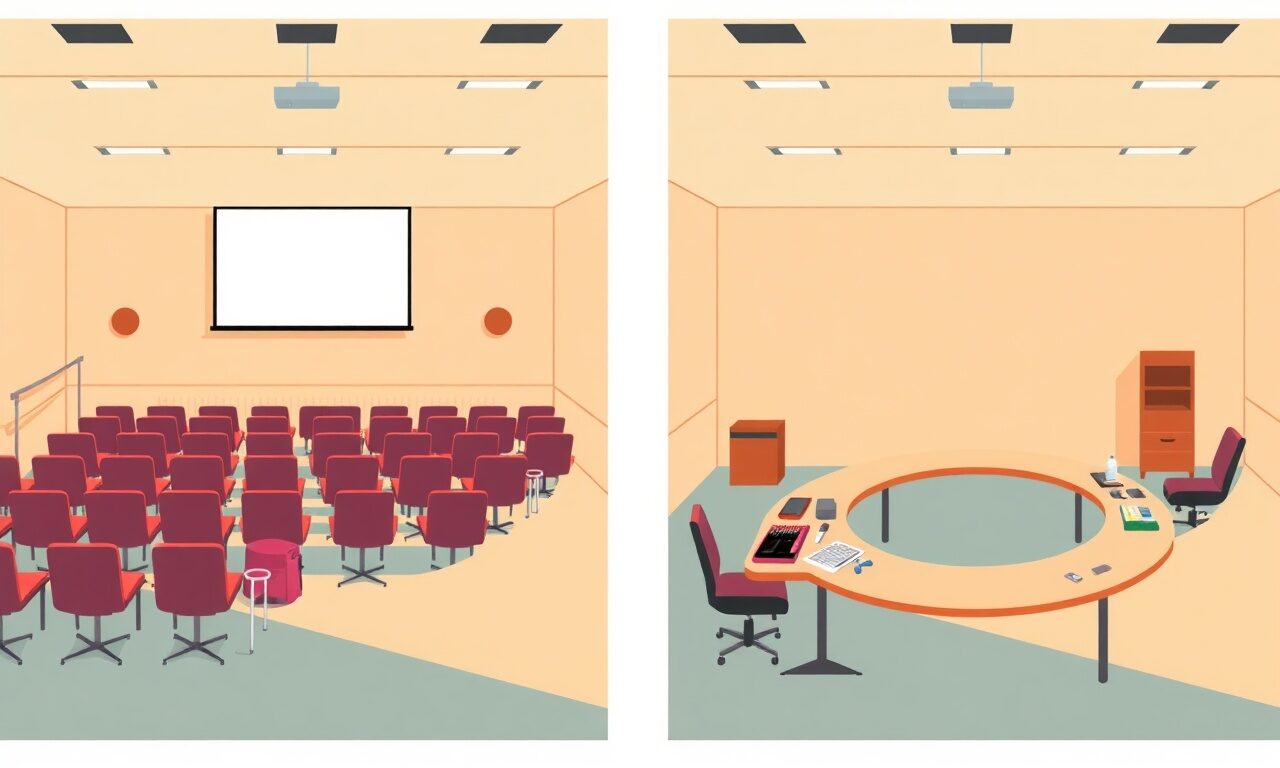
Live vs. Evergreen Webinars: Which Format Should You Build First?
Two webinar formats, two totally different workflows — here's how to pick the one that matches your offer, your calendar, and your energy level.
Every creator who's ever run a webinar eventually asks the same question: should I go live again, or record it once and let it sell on repeat? Most advice treats evergreen as the obvious upgrade — set it and forget it, right? Wrong framing. Live and evergreen aren't a beginner-to-advanced ladder, they're two different jobs that suit two different kinds of creators and two different kinds of offers. Pick based on the wrong signal — hype instead of honesty about your calendar, or convenience instead of what your offer actually needs — and you'll spend months fighting a format that was never going to work for you.
Start with the offer, not the format
The question isn't "which webinar format is better," it's "which format fits what I'm actually selling." A coaching program that changes based on cohort feedback, a course you're still iterating on, or a launch with real scarcity (a cart that closes, a cohort that starts on a date) all want live. The energy of a real room, real-time objection handling, and a hard deadline are doing genuine selling work — you can't fake urgency in a recording that plays the same way every day. On the other hand, a stable offer that doesn't change month to month — a template pack, an evergreen mini-course, a $47 workshop replay — wants evergreen, because the thing you're teaching doesn't need you in the room to be convincing.
The two creator profiles this actually maps to
Beyond the offer, format choice comes down to who you are as a operator. There's the real-time hype builder — someone who sells better with an audience watching, who feeds off live chat, whose energy on camera is the actual product. And there's the set-and-forget seller — someone whose strength is building a genuinely great asset once and letting it do repeatable work while they focus elsewhere. Neither is more advanced than the other. A hype builder who forces themselves into an evergreen workflow usually produces a flat, lifeless recording. A set-and-forget seller who commits to weekly live sessions usually burns out by month three and the quality — and the close rate — drops with it.
| Signal | Points to live | Points to evergreen |
|---|---|---|
| Your energy on camera | Noticeably better with a real audience watching | About the same solo or live — no real difference |
| Offer stability | Changes often, cohort-based, or seasonal | Same pitch works for months without edits |
| Your calendar | Can commit to a recurring slot without dread | Wants selling to happen without a weekly commitment |
| Urgency in the offer | Real deadline (cart close, cohort start, live bonus) | No natural deadline — always-on makes sense |
| Team support | Solo, handling chat and pitch yourself is fine | Wants the asset doing the work while you're offline |
What each format actually costs you in time
Be honest about the ongoing time cost, because this is where most creators misjudge the decision. A live webinar costs you roughly the same 60-90 minutes every single time you run it, plus promotion, plus reminders, plus the mental load of showing up "on" for a room of strangers on a schedule. That's a real, recurring line item on your week — fine if you're a hype builder who wants that structure, brutal if you're not. Evergreen costs you far more up front — scripting, recording, editing until it's genuinely tight — and then close to nothing per sale after that. The break-even point is usually somewhere around the fourth or fifth time you'd have run the live version; past that, evergreen is cheaper in hours, even if it converts at a lower rate per viewer.
Evergreen doesn't win because it converts better. It wins because it converts at all while you're doing something else.— store.fan team
Conversion math: don't compare the wrong numbers
A live room genuinely closes at a higher rate per attendee — real-time urgency and Q&A do real work, often 2-4x the close rate of a recording watched cold. But that comparison misleads people, because it ignores reach and repeat sales. A live session run once a month reaches whoever shows up that day. An evergreen webinar linked from your bio, your emails, and your social posts keeps converting every day of the month, at a lower rate per viewer but against far more total viewers. Run the actual math on your numbers before assuming live "wins": 40 live attendees at a 15% close rate is 6 sales; 400 evergreen viewers over a month at a 3% close rate is 12 sales for zero additional hours of your time.
Before you commit to a format, check
0/5The hybrid path most people actually land on
You don't have to pick one forever, and honestly, most successful creators don't. The common pattern: run the webinar live first, several times, while you're still figuring out the pitch, the objections, and the exact phrasing that gets people to buy. Live gives you fast feedback — a room reacts in real time, and you learn what lands within a single session instead of guessing for weeks. Once the script stops changing and the close rate stabilizes, record a clean version and turn it evergreen. Keep running the occasional live session for launches or live-only bonuses, but let the evergreen version handle the daily grind of new followers discovering you between launches.
- 1Run it live 3-5 times, refining the pitch and bridge segment each time based on what questions and objections come up.
- 2Once close rate stabilizes, record a clean version — same structure, tighter delivery, no dead air.
- 3List the evergreen replay as a standing product on your store so it sells without a scheduled event.
- 4Keep one live cohort or launch per quarter for real urgency and a live-only bonus.
- 5Feed traffic to whichever version fits the moment — live for launch weeks, evergreen the rest of the time.
Neither format works without instant checkout
Here's the part that's identical no matter which format you pick: the sale still lives or dies on what happens the second someone decides to buy. In a live room, that's a link pinned in chat that has to work right now, mid-pitch, while attention is at its peak. In an evergreen funnel, it's a checkout page that has to close the sale unattended, at 2am, with nobody there to answer a last question. Either way, a clunky, multi-step, DM-me-for-the-link process quietly caps both formats before you even get to compare conversion rates. Selling through your own store.fan page solves this the same way for both: connect Stripe or drop in a PayPal email once, and Apple Pay and Google Pay work automatically, so a buyer can pay in seconds whether they're watching you live or hitting play on a replay at midnight. Delivery — the join link, the replay access, the bonus files — goes out instantly on-screen and by email, no manual follow-up required either way.
Building the store that supports whichever you choose
Whichever format you land on, it needs a real home — not a scheduling link and a hope. A live example store shows how a creator lists both a live cohort and an evergreen replay side by side without the page feeling cluttered. Discount codes work for live-only urgency (a code that expires when the room closes) just as well as for evergreen scarcity (a limited-time price on a standing product). And once you've got either version selling, your customer list and broadcast emails let you remind past buyers about the next live date or nudge cold registrants toward the evergreen replay — the exact follow-up sequence that turns a one-time webinar into a repeatable revenue line. Check plans to see which tier fits your webinar volume, and browse more guides on structuring the pitch itself once your format is locked in.
Set up your webinar — live, evergreen, or both — with instant checkout before your next session.
Start freeNo — it rules out live, not webinars. Record your pitch once, polish it until it's genuinely tight, and run it evergreen. Plenty of successful sellers never do a live session at all.
Yes, and it's a common pattern — list them as two products at two price points, since the live version usually justifies a premium for real-time access and Q&A.
You mostly don't have to think about it — both formats deliver the join link or replay access instantly on-screen and by email the moment payment clears, whether that's mid-live-session or three weeks later on autopilot.
That's expected and not necessarily a problem — evergreen trades close rate for reach and zero ongoing time cost. Compare total sales, not rate, before judging it as underperforming.
Check the FAQ for common questions, or contact support directly — most setup snags are quick fixes once someone looks at your specific store.
The format debate only feels hard because most advice treats it as a maturity ladder instead of a fit question. It isn't. A hype builder selling an evolving offer should run live and not feel behind for skipping evergreen. A set-and-forget seller with a stable offer should record once and stop apologizing for not doing weekly sessions. Match the format to your offer, your calendar, and your actual energy on camera — then make sure whichever one you build sits on top of a store that turns a decision into a payment in one click, not five.
Turn your knowledge into income
Launch your Store.Fan in minutes — sell digital products, courses, and calls straight from your bio. Free to start.