The Automated Webinar Funnel: How to Sell a 'Live-Feeling' Session 24/7
Simulated countdowns, scheduled start times, real deadlines — here's how to build an always-on webinar funnel that never feels like a rerun.
A recorded webinar sells worse than a live one for a very specific, fixable reason: it feels like a recording. The moment a viewer senses "this has already happened to other people and nothing here is actually happening to me," every urgency cue collapses — the countdown reads as decoration, the "only 3 spots left" reads as a lie, and the whole funnel drops to the conversion rate of a plain product page. This isn't a case for abandoning automation and going live forever; it's a build problem. The creators quietly running six-figure evergreen funnels aren't tricking anyone — they've engineered specific, honest mechanics that make an automated session feel like it's happening right now, to this viewer, with a real deadline attached. This is the build guide for those mechanics, not the general "repurpose your recording" idea.
Why 'feels live' is the entire game
People don't act on information — they act on deadlines. A viewer who can watch your webinar whenever they want will, by default, watch it never; "later" is where good intentions go to die. A viewer who believes the session starts in 11 minutes, or that a bonus disappears in 22, makes a decision now. The entire discipline of automated-webinar design is manufacturing that decision pressure without lying about it, because modern audiences are extremely good at spotting fake scarcity — a countdown timer that resets when you refresh the page is a well-known trust-killer, and one screenshot of it on social media can undo months of goodwill. The goal isn't to fool anyone. It's to build a funnel where the urgency is structurally real, even though the underlying video is pre-recorded.
Mechanic one: scheduled instances, not instant play
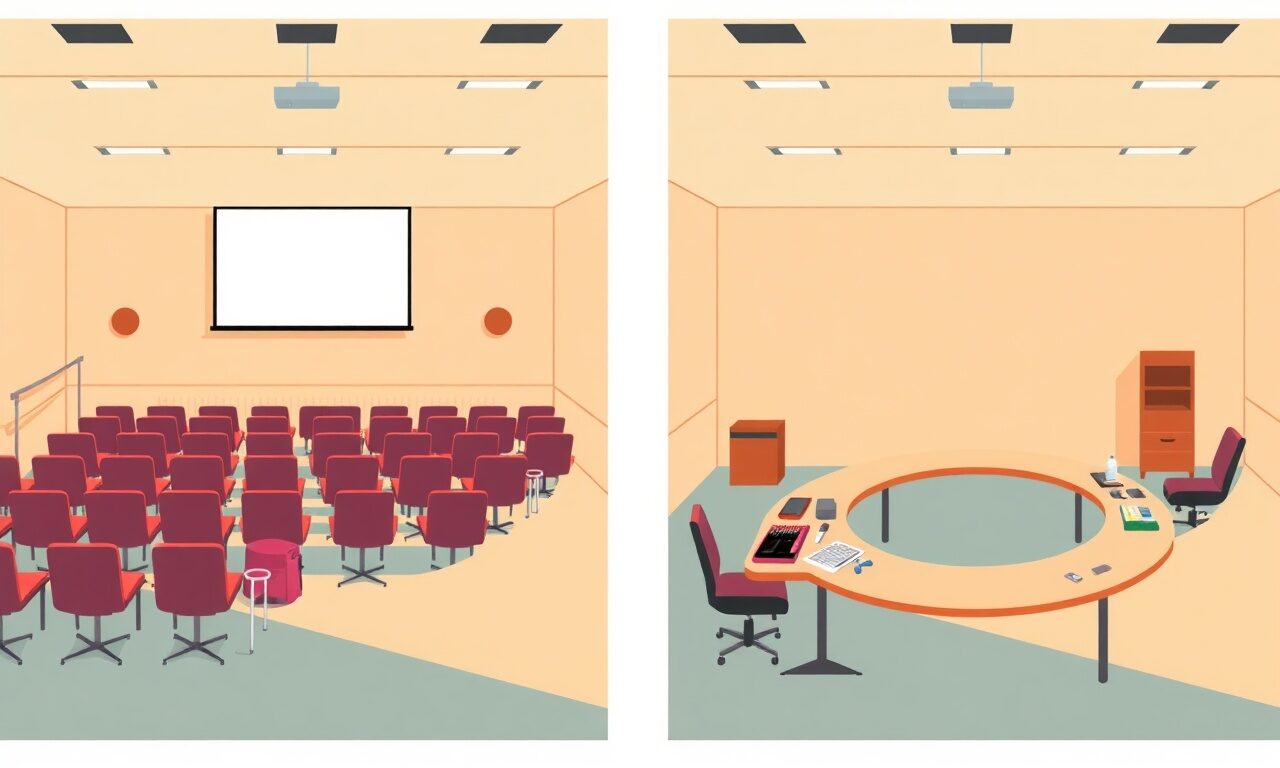
The single biggest lever is refusing to let people watch the moment they land. Instead, the registration page offers a short list of upcoming "start times" — say, one starting in 8 minutes, one in 4 hours, one tomorrow at 10am in the viewer's time zone. This is the mechanic that separates a real automated-webinar funnel from a plain video landing page: the viewer picks a slot, gets a confirmation, and the room genuinely does not open until that time. It's a real wait, just a short and rotating one. That small delay does two things a static "watch now" button can't — it triggers a return visit (people who register come back, which is a much warmer click than a cold one), and it recreates the psychological shape of an actual event: you signed up, you're waiting, the room opens.
| Instance pattern | Best for | Trade-off |
|---|---|---|
| Every 15-30 min | High-traffic launches, paid ads | Very short wait, but less of a 'real event' feel |
| Every 4 hours, fixed clock times | Most creators, most traffic levels | Sweet spot — feels scheduled, wait stays under half a day |
| Twice daily, 10am/7pm local | Coaching or B2B audiences checking a calendar | Strongest 'this is a real time slot' feeling, slower funnel throughput |
| Once daily only | High-ticket offers, deliberate buyers | Maximum credibility, but you lose impulsive same-hour buyers |
Mechanic two: urgency that's tied to something real
This is where most automated funnels go wrong, and it's an easy fix. There are two honest ways to run urgency, and both hold up under scrutiny. The first is a per-viewer timer: the bonus or discount countdown starts the moment this specific person joins the session, not on a fixed calendar date shared by everyone. Because it's tied to their own session start, it genuinely does expire when it says it will, for them — refreshing doesn't reset it, because the deadline lives in a real timestamp tied to their registration, not a cookie that resets on demand. The second is a real calendar deadline: the cart for the underlying course, coaching package, or membership actually closes on a specific date, and the automated webinar is simply the vehicle explaining the offer before that date. Both are honest because the thing being counted down is a thing that actually happens.
- Do: tie a bonus timer to the individual's own session join-time, so it's true for them specifically.
- Do: run a real, calendar-based cart-close date and let the automated session simply explain it.
- Do: cap the discount code so it actually stops validating after the deadline — an expired code that still works quietly kills all future urgency.
- Don't: use a countdown that resets when the page is refreshed or revisited.
- Don't: claim 'only 3 spots left' on an automated, unlimited-capacity room — there's no room to run out of.
The goal isn't to make a recording look live. It's to build a funnel where every urgency cue is describing something that's actually true.— store.fan team
Mechanic three: the small live-feeling details that do heavy lifting
Beyond scheduling and honest deadlines, a handful of small production choices carry a disproportionate amount of the "this feels real" weight. A brief, genuinely live-recorded intro — even just 90 seconds of you saying the current month and referencing something timely — resets the sense that this was filmed once and never touched again. Simulated chat, where it's used, should be labeled or kept extremely light-touch; the moment a viewer sees three chat messages timestamped identically at different "live" starts, the trick is obvious and it costs you more trust than not having chat at all. The safer, durable version of chat is a genuinely monitored, async version — viewers can leave real questions, and you actually answer them, even if not that same second. That's not a live simulation, it's just good support, and it holds up under any scrutiny.
The automation stack: what actually has to run
None of this works as a manual process — the entire point is that it runs while you sleep. Three systems have to work together without you touching them. First, a scheduler that manages the instance times and time-zone conversion so a viewer in Manila and one in Madrid both see accurate local start times. Second, a playback engine that holds the room closed until the scheduled minute and then plays the recording start to finish, ideally without a scrubber bar the viewer can drag to skip the bridge and the pitch. Third — and this is the part creators most often bolt on late, at real cost — instant, automatic delivery the second someone actually buys. If the teaching and the urgency work but checkout is slow or manual, you've built a perfect funnel with a wall at the finish line.
This is exactly the gap a real storefront closes. Selling the underlying course, coaching package, or membership through your own store.fan page means a viewer who decides mid-pitch can pay immediately — card, Apple Pay, or Google Pay — and get the access link on-screen and by email before the session even ends. There's no "I'll DM you the link later" step where urgency has time to decay. A live example store shows what that checkout-to-delivery path actually looks like end to end, and it's worth studying before you build your own version.
Automated webinar launch checklist
0/7Why this needs a real storefront underneath it
An automated webinar is a warm-up act — the close still happens on whatever page you send people to at minute 45. If that page is a generic checkout with extra fields, a delayed manual invoice, or a "reply to this email for access" step, you've spent real engineering effort on urgency only to throw it away at the one moment it mattered. Building the offer as a proper product on store.fan means the price, the bonus, and the delivery are already handled — connect Stripe or add a PayPal email once, and every sale after that is instant and automatic. On paid plans there are 0% platform fees, so the volume this kind of always-on funnel generates stays yours. Check pricing for the plan that fits your current volume, and skim the FAQ for setup specifics before you launch.
Build the storefront your automated webinar closes on, so every honest deadline actually converts.
Start freeNot if you're careful. The line is simple: every cue on the page has to describe something true — a real scheduled start time the viewer actually waits for, a real per-viewer bonus deadline, a real cart-close date. What's dishonest is a countdown that resets on refresh or a 'spots left' claim on an unlimited room.
Most creators land on 3-4 fixed times spread across the day, which keeps the wait under a few hours for most time zones without making the room feel like it's playing on a loop every 10 minutes.
You need a webinar or funnel tool that supports scheduled instances and per-viewer timers — what you don't need is custom development. Pair that tool with a proper checkout so delivery is instant; see common questions for how that connects to your store.
No — price it the same as the live version whenever possible. Discounting the automated version trains your audience to always wait for the cheaper, non-live version, which undercuts your actual live sessions.
Refresh the live-feeling intro segment seasonally, rotate the bonus, and check your built-in inbox for the objections viewers are actually raising — that's usually a faster fix than rebuilding the whole funnel. If something's stuck technically, contact support.
The short version
Stop trying to make people believe a recording is live — build a funnel where the wait, the deadline, and the delivery are all real, just automated. Scheduled instances instead of instant play. Bonus timers tied to each viewer's own join-time instead of a shared, resettable clock. A monitored inbox instead of fake chat. And a real storefront underneath it so the sale actually completes the second someone decides. Do that and the funnel runs while you sleep without ever getting caught pretending. For more builds like this one, browse the blog.
Turn your knowledge into income
Launch your Store.Fan in minutes — sell digital products, courses, and calls straight from your bio. Free to start.