Workshop or webinar: what the word does to your price and your room
The same ninety minutes, two different sets of expectations. How the name changes who books, what they bring, and what you can charge.
You are typing the title of a live session and your cursor is sitting between two words. The content is decided: ninety minutes on Thursday, the same material either way, the same you at the front. But one word says webinar and the other says workshop, and you can feel that they are not interchangeable. They are not. They pull different people into the room, they set different expectations about what happens in it, and they support different prices.
What each word quietly promises
Nobody reads a title carefully, which is exactly why the noun does so much work. It arrives ahead of your description and tells someone how to sit: leaning back with a coffee and one eye on their inbox, or leaning forward with a document open. That posture decides how much they get out of the session, which decides what they say about it afterwards.
Neither word is better. A webinar reaches more people for less money each and is the right shape for explaining, demonstrating and answering. A workshop reaches fewer people for more money each and is the right shape for producing. Trouble only starts when the word and the session disagree.
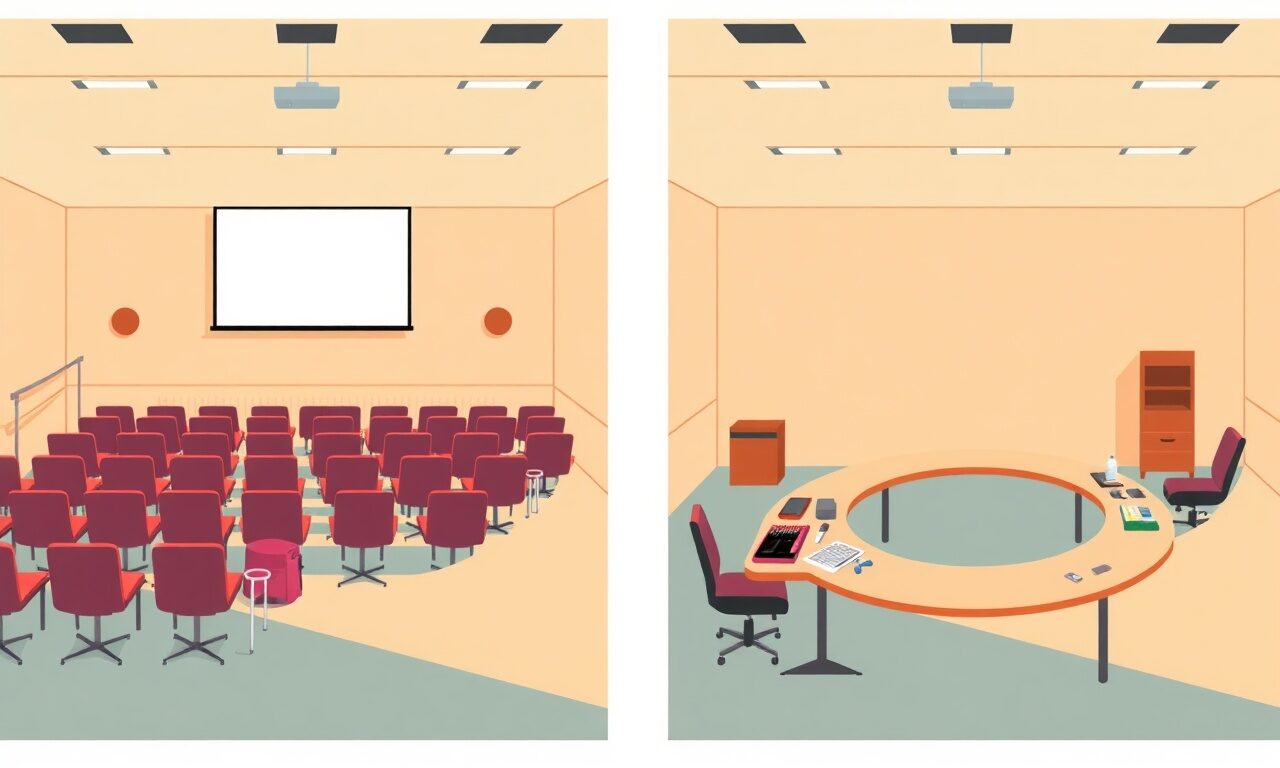
| If you call it a webinar | If you call it a workshop |
|---|---|
| People expect to watch and ask the odd question | People expect to make something during the session |
| Cameras off is normal and nobody feels rude | Cameras on is assumed, and silence feels like a failure |
| A big room is a good sign | A big room reads as a broken promise |
| Lower price per head, more heads | Higher price per head, fewer heads |
| Slides carry the session | A task, a template or a worked file carries the session |
| A recording is a fair substitute for attending | A recording is a poor substitute, because the doing was the point |
The genuinely hard case is the session in the middle: you want the reach of a webinar and the intensity of a workshop, so you promise both and deliver a talk with an awkward ten-minute exercise in it. That is the version people leave early. Choose the word for the session you actually intend to run, and let the other benefits go.
The usual way a live session gets sold
Most live sessions start life as a post, a form and a series of direct messages about payment. It works, in the sense that the session happens, but the expectations you were so careful about in the title tend to evaporate somewhere between the announcement and the joining link.
| Announced in a post, paid in DMs | Run as a paid webinar on store.fan |
|---|---|
| The price is negotiated one message at a time | The price sits on the product page, the same for everyone who reads it |
| You find out what people expected during the session | Order-form questions ask what they want and what they are bringing, at checkout |
| A seat is reserved when someone says they are in | The seat is confirmed when the payment clears |
| Attendee details live in three chat threads | Every buyer lands in your customer list, exportable to CSV on every plan |
| No way to tell whether the title or the topic sold it | Views, buyers and revenue for that session, plus where the traffic came from |
| The next session starts from nothing again | The page, the description and the buyer list are all still there |
Choosing the word and building around it
Work in this order, because the name changes everything downstream. Paid webinars hold both formats; what differs is the price, the cap and what you ask people before they arrive.
Before you publish the session
0/8A worked example: the same ninety minutes, twice
Take a session on writing a personal statement. As a webinar it might sell at £15, with an open room, forty-five minutes of teaching, examples on screen, half an hour of questions and a recording afterwards. Plenty of people can be helped that way, and it costs each of them the price of two coffees to find out whether your approach suits them.
As a workshop it becomes something else. Twelve places at £60, cameras on, and everyone brings a draft. You teach for twenty-five minutes, they write for thirty, and you read four aloud and rework them live. The room is a quarter of the size and the takings are higher; more to the point, twelve people leave with a finished statement rather than a set of notes about statements. The order-form question that makes this work is the plainest one on the page: paste the first two sentences of your current draft. Anyone who cannot has just told you they are not ready, and anyone who can has already started the session.
Put your next live session up with a price, a cap and the questions that set expectations before anyone joins.
Start for freeThe mistake most people make
They pick the word that sounds most impressive rather than the one that describes the session. Masterclass is the usual culprit, and it is a fine word if you are genuinely a master demonstrating at length; used to dress up a forty-minute overview, it guarantees that a portion of the room is disappointed before you begin. The same goes for calling a talk an intensive, or a Q&A a workshop. Expectation is not something you manage in the session; it is something you set in the title and confirm at the checkout. Pick the honest noun, price it accordingly, and let the description do the persuading.
Yes, and it is often the better plan: a cheap webinar that reaches a wide room, and a small paid workshop for the people who want to do the work with you. Sell them as two products with two prices rather than one session hedging between the words.
Small enough that you can give everyone attention in the time you have. If your format needs you to read work aloud, count the minutes per person and work backwards; a cap you can defend is better than a cap that sounds exclusive.
You can, but be honest on the page about what it captures. Recordings of a working session are much less useful than recordings of a talk, and selling the replay afterwards as if it were the workshop tends to disappoint people who paid for the room.
They move the awkward conversation before the payment rather than after it. Asking what someone is bringing filters out the wrong fit, tells you how to pitch the first ten minutes, and gives you the raw material for the examples you use live.
The word is the cheapest lever you have. It costs nothing to change, it moves the price, the room size and the mood of the session, and it is the one part of the listing everyone reads. Choose it for the ninety minutes you actually want to spend, then make the rest of the page agree with it. If you are weighing formats more broadly, the features overview and the FAQ cover what each product type expects of you.
Open a storefront and publish the session with the honest noun, the right price and a cap you can defend.
Publish your sessionTurn your knowledge into income
Launch your Store.Fan in minutes — sell digital products, courses, and calls straight from your bio. Free to start.