Office Hours That Work: Structuring Live Q&A Sessions So Every Cohort Question Gets Answered
Unstructured Q&A calls turn into dead air or one dominant voice — here's the format that fixes both.
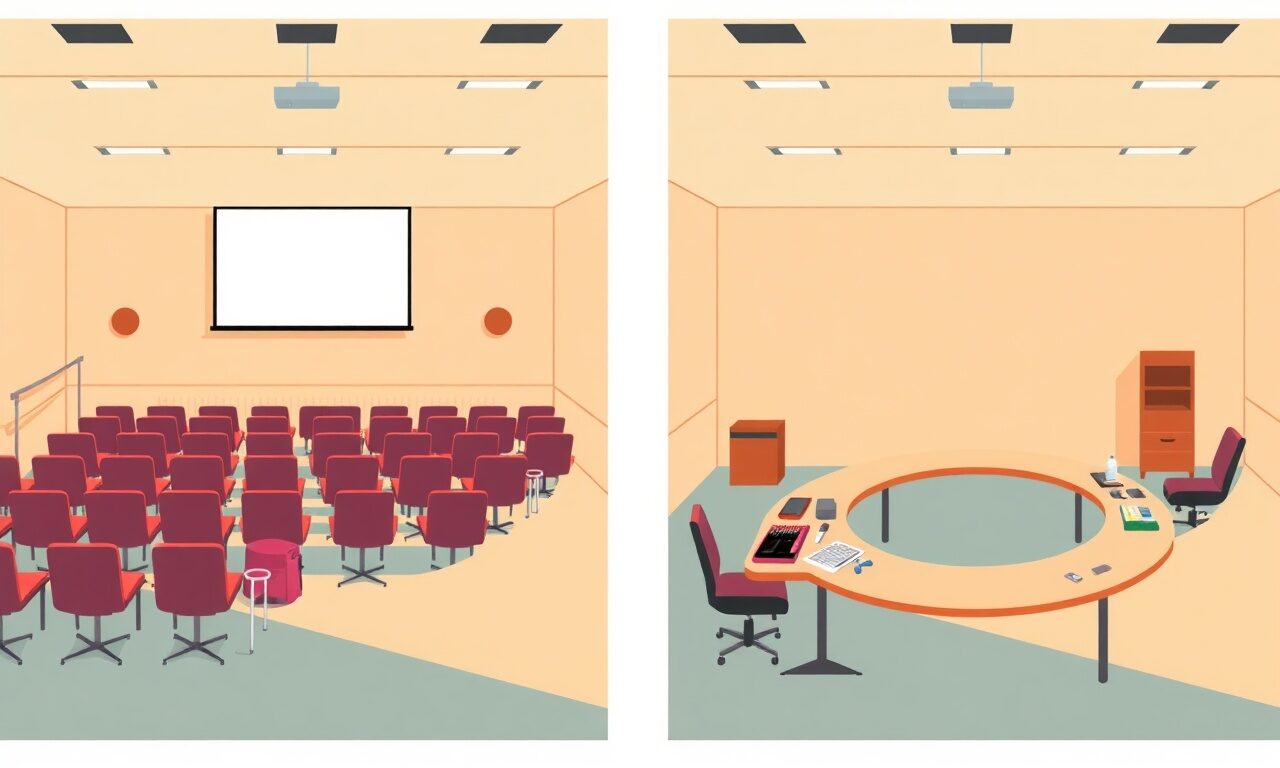
You block an hour on the calendar, ping your cohort that office hours are live, and open the call with an energetic "so what questions do you have?" Ninety seconds of silence follow. Then one person — usually the same person every week — unmutes and takes the next twelve minutes with a question that's really three questions stacked on top of each other. Everyone else either drops off or sits there hoping their thing gets a turn. It never does. This is the default shape of unstructured office hours, and it's why so many creators quietly stop running them: not because students don't have questions, but because the format has no mechanism for surfacing the right questions in the right order with a hard stop on any single voice. The fix isn't more charisma on your part — it's a repeatable structure that does the triage before the call even starts.
Why open-floor Q&A breaks down at scale
Open-floor Q&A works fine for four people. It falls apart around cohort sizes of 15-20, which is exactly the size where most creators start running paid group programs through their store. The math is simple: a 45-minute call minus 5 minutes of housekeeping leaves 40 minutes. If six people ask questions and two of them ramble, you've got four people who paid for the session getting nothing but a front-row seat to someone else's problem. Multiply that by every week of a 6-week cohort and you've got a support model that scales worse the more successful you get — the opposite of what a live Q&A session is supposed to do.
There's a second, quieter failure mode: dead air. Even engaged cohorts freeze up when asked to produce a question on the spot, in front of peers, with a countdown clock in their head. People think of their best question five minutes after the call ends, in the shower, or while re-reading a module. An office-hours format that only accepts questions live is throwing away most of the good ones.
The structure: submit, cluster, time-box, overflow
The fix is a four-step pipeline that moves triage out of the live call and into the 48 hours before it. None of this requires new software — a form, a doc, and a calendar reminder cover it.
- 1Open a submission window. 48-72 hours before each session, send a short reminder — a broadcast email works well here — asking cohort members to submit their question in one or two sentences, with context (what they tried, what happened).
- 2Cluster by theme. The morning of the call, group submissions into 3-5 buckets. Three people asking slightly different versions of "how do I price my first offer" become one 8-minute segment, not three.
- 3Assign a rough time-box per cluster. Write the minute allocation on your own notes and, ideally, share it at the top of the call: "We've got pricing (8 min), technical setup (10 min), positioning (12 min), then open floor for whatever's left."
- 4Route the overflow. Anything submitted but not reached gets an answer posted afterward in your inbox thread — not silently dropped, explicitly promised a follow-up.
Where the async overflow lives
The single biggest upgrade most creators can make to their office-hours format isn't anything that happens on the call — it's giving unanswered questions somewhere real to go afterward. A comment buried in a Discord channel or a DM that gets lost in someone's inbox both quietly signal that the question wasn't actually a priority. Instead, route it through the built-in inbox on your store.fan storefront: every customer who bought the cohort already has a thread there tied to their purchase, so a written answer lands in a place they'll actually check, permanently attached to their order rather than floating in a group chat. It also means you're answering once, in writing, instead of fielding the same DM from three separate people who all had the same question.
This overflow thread does something else valuable: it becomes your content backlog. Every question you answer async is a candidate for next cohort's FAQ, a module update, or a short bonus lesson. Creators who treat the inbox as disposable support are leaving a stack of pre-validated content ideas on the table.
Running the call itself
| Segment | Time | What happens |
|---|---|---|
| Housekeeping | 3-5 min | Recording notice, agenda for today's clusters, link to submit late questions |
| Clustered questions | 25-30 min | Work through pre-grouped themes in priority order, most-submitted first |
| Open floor | 5-10 min | Live hands only, hard stop at 2 min per question |
| Wrap + recap | 2-3 min | Preview what's answered in the inbox thread, confirm next session's submission window |
Two small mechanics do most of the heavy lifting here. First, say the time-box out loud — "I've got about 8 minutes on this one, so I'll cover the core answer and we can go deeper async if needed." Naming the constraint out loud makes it feel fair rather than abrupt when you move on. Second, keep a visible running list (shared screen, pinned doc, whatever) so people can see their question is queued, not ignored. That single visual cue eliminates most of the "can I just ask real quick" interruptions that derail a time-boxed call.
The best office hours feel less like a free-for-all and more like a well-run stand-up meeting — everyone knows the format, so nobody's fighting for airtime.— Common feedback from cohort creators after switching to pre-submitted formats
Checklist: before you go live
Pre-call setup
0/6Making the recording and recap actually get used
A recording nobody watches isn't an asset, it's a graveyard link. Two habits fix that: timestamp the clusters in the video description so people can jump straight to their theme, and send a short written recap — three to five bullet points, not a transcript — the same day, while the call is still fresh in people's minds. The recap is also a natural place to re-surface anything you promised to answer async, closing the loop publicly so the whole cohort sees follow-through, not just the one person who asked.
If you're running office hours as part of a paid coaching or cohort offer, this whole structure is also what makes the offer defensible at a higher price. "Live Q&A included" is a weak selling point when the reality is chaotic 40 minutes of dead air and one dominant voice. "Structured weekly office hours with guaranteed answers, live or in your inbox" is something you can actually put on your store page and charge for with a straight face.
FAQ
Leave 5-10 minutes of true open floor at the end for exactly this. It also acts as a release valve — people who see the queue moving smoothly are more patient waiting for their live turn.
No — a simple form or even replies to a broadcast email work fine. The structure matters far more than the tooling. Check the FAQ if you're wondering what's built into your store versus what needs an external form.
Redirect it to the inbox thread on the spot: "let's take that one to your thread so I can give you a fuller answer" — this protects the asker and keeps the group call moving.
The pre-submission step still helps even at small sizes because it eliminates dead air, but you can be looser with time-boxing since domination by one voice is less likely.
Package it as part of a course or membership tier, connect Stripe or PayPal, and you're able to create your store and start collecting sign-ups the same day — delivery and the inbox thread are handled automatically once someone buys.
Ready to package your cohort, course, or coaching calls into one sellable link with built-in delivery and an inbox for every buyer?
Start freeNone of this requires a big platform investment — it requires a format. Open a submission window, cluster the themes, name the time-box out loud, and route the leftovers to a thread instead of the void. Do that for two or three sessions and your cohort starts submitting sharper questions on their own, because they've learned the system actually answers what they send in. For more tactics like this on running paid programs, memberships, and live sessions, browse the blog — and if you're still deciding whether your current plan supports broadcast reminders and inbox threads at your cohort size, it's worth a quick look at plans before your next cohort kicks off.
Turn your knowledge into income
Launch your Store.Fan in minutes — sell digital products, courses, and calls straight from your bio. Free to start.