Cohort Courses vs. Self-Paced: Which One Should You Build First?
Same topic, two totally different businesses — pick the one that matches your energy, not just your niche.
Two creators can teach the exact same skill — say, freelance copywriting — and end up running businesses that barely resemble each other. One hosts a 6-week cohort with a Slack channel, live calls, and a hard deadline. The other sells a library of videos someone buys at 2am and finishes over three weekends, alone. Both are "courses." Both can work. But they demand almost opposite things from you as the creator, and picking the wrong one for your current life stage is how good ideas turn into abandoned launches. Here's how to actually decide.
The real difference isn't the content — it's the delivery model
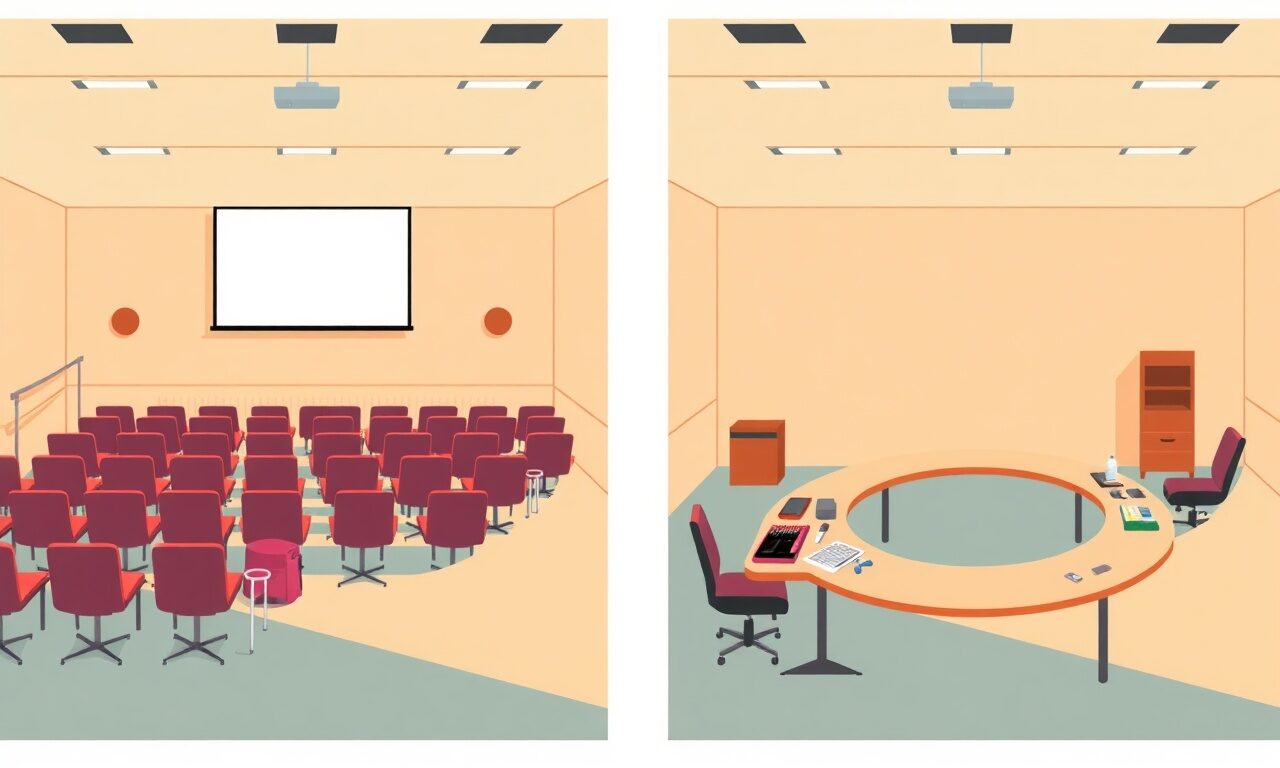
Strip away the marketing language and a cohort course is really a service with a syllabus: a fixed group of people moving through material together, on your schedule, with you present. A self-paced course is a product with a table of contents: recorded once, sold indefinitely, consumed whenever the buyer feels like it. That distinction — service versus product — is the single biggest lever on everything downstream: how much you charge, how often you can run it, and how much of your actual calendar it eats.
Time investment: front-loaded vs. drip-fed
Self-paced courses concentrate the pain at the start. You're writing scripts, recording video, cutting it together, and building a curriculum for weeks before a single sale lands. Then the marginal cost of the 500th student is close to zero — access is delivered automatically the moment someone pays, no extra effort from you. Cohorts flip that curve: the upfront lift is lighter (a rough outline and a set of live-call topics is often enough to launch), but every single cohort you run costs you real hours — office hours, grading, Slack replies, the 9pm "quick question" DM.
- Self-paced: 3-6 weeks of concentrated production, then a course that runs itself. Your time cost per new buyer approaches zero.
- Cohort: a syllabus you can sketch in a weekend, but 4-8 weeks of live involvement every time you run it — and you have to keep running it to keep earning from it.
- Hybrid (the one most creators land on eventually): pre-recorded lessons plus a live cohort wrapper — students watch on their own time, then meet weekly to apply it together. More build time than pure self-paced, less recurring drag than pure cohort.
If you're already stretched thin — full-time job, other launches, a newborn, whatever — that recurring cohort time cost is the part people underestimate. A self-paced course you finished in March is still selling in November without you doing anything. A cohort you ran in March is finished earning the day it ends, until you schedule cohort two.
Price ceiling: why cohorts can charge 5-10x more for less content
This is the number that surprises new creators most: a cohort with 12 hours of live coaching regularly outsells a self-paced course with 40 hours of polished video, at three or four times the price. That's not irrational — buyers aren't only paying for information, they're paying for accountability, live feedback, and a deadline that makes them actually finish. A self-paced library competes on the shelf next to every other pre-recorded thing; a cohort competes on "will I actually do this if nobody's watching."
Self-paced courses sell information. Cohorts sell finishing.
As a rough illustration: a self-paced course on a given topic might land somewhere in the $49-$199 range because it's competing against every other video library out there. A cohort teaching the same core material, with live calls and peer accountability bolted on, can often justify $500-$2,000+ because you're also selling deadline pressure, direct access to you, and a built-in support group. Same knowledge, wildly different price ceiling — because the format is doing extra work the video alone can't.
Community demands: the part that quietly makes or breaks a cohort
A cohort without community is just an expensive webinar series. The thing that actually justifies the higher price — and keeps completion rates up — is peer energy: a group chat where students post wins, ask questions between calls, and hold each other accountable. That means a cohort launch is really two builds happening at once: the curriculum, and the social container it lives in. Skip the second one and refunds go up, because people are quietly paying for connection they never got.
- Cap cohort size deliberately. A group of 15-30 people is usually the sweet spot — small enough that everyone gets seen on a call, large enough that the group chat doesn't go silent.
- Set a hard start and end date and market it. "Enrollment closes Friday, we start Monday" is what makes a cohort feel different from a course you can put off forever.
- Build in a forcing function — a weekly homework post, a demo day, a final project shared with the group — so momentum doesn't die in week three.
- Self-paced courses can borrow a little of this too: a private community for buyers (even a simple one) meaningfully boosts completion and referrals, without you committing to a live schedule.
A quick decision framework
- 1List how many hours a week you can realistically give to teaching, ongoing, for the next two months. Under 3? Lean self-paced. 5+? A cohort is viable.
- 2Check your audience size. Cohorts need a launch cliff — say, 15-40 committed buyers in a short window — so they work best once you have a warm list to launch to, not a cold audience.
- 3Decide what you're actually selling: information (self-paced wins) or transformation-with-accountability (cohort wins). Fitness, career pivots, and habit-change topics lean cohort; reference material, templates, and how-to skills lean self-paced.
- 4Pressure-test the price. If your topic can't support a price above roughly $300-500, the live overhead of a cohort probably isn't worth it — go self-paced and sell on volume instead.
- 5Consider running a small live cohort first, even if self-paced is the long-term goal — it's the fastest way to find out which parts of your curriculum actually land, before you spend weeks recording something nobody asked for.
Selling either one without building two systems
The good news: you don't need separate infrastructure for each format. On store.fan, both a self-paced course and a cohort-style offer live as products on the same storefront — store.fan/yourname, the one link you already put in every bio. List the self-paced course as a standalone product with instant, automatic access delivered on-screen and by email the moment someone pays. List the cohort as its own product too, using the description and a fixed enrollment window to signal the live, limited-time nature of it — students get their access details the same automatic way, no manual emailing required. Connect Stripe or a PayPal email once, and Apple Pay and Google Pay just work for both. Run a discount code for early cohort sign-ups, or bundle a self-paced library as a bonus for cohort buyers — the same dashboard, the same customer list, no separate checkout to manage.
There's no universally right answer between cohort and self-paced — there's only the right answer for how much live time you can give right now, and how much of your price tag you want to earn from your presence versus your production. Pick the one that fits this season of your business, sell it well, and let the other format become obvious once you've actually taught the material at least once.
Turn your knowledge into income
Launch your Store.Fan in minutes — sell digital products, courses, and calls straight from your bio. Free to start.