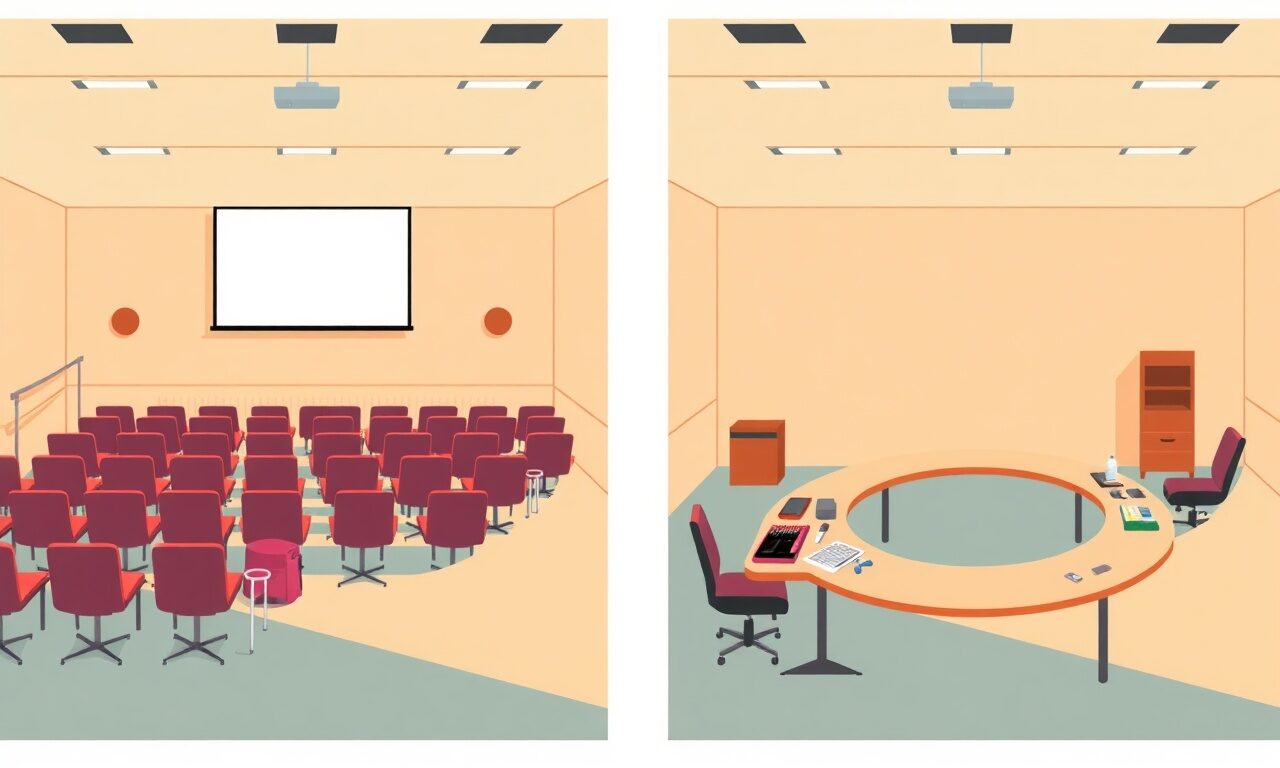
The Co-Hosted Webinar: Splitting Revenue and Doubling Your Audience With a Guest Teacher
Two audiences, one webinar — how to structure a co-hosted session and split the payout fairly.
You've hit a ceiling with your list. Every webinar you run converts the same fraction of the same faces, because you're always promoting to your audience. The fastest, cheapest way to break that ceiling isn't a bigger ad budget — it's borrowing someone else's audience for ninety minutes. A co-hosted webinar puts you in front of a creator's followers who have never heard of you, while you return the favor, and you split the resulting revenue in a way that's clear before anyone hits 'go live.' Done right, it's the single highest-leverage collaboration in the creator playbook: two people do the work of one webinar and both walk away with new customers, new emails, and a fair check. Done sloppy — no written split, no attribution plan, no shared checkout — it turns into a resentment machine. This is the logistics guide for doing it right.
Why co-hosting works better than a solo webinar
A solo webinar converts your existing trust into sales. A co-hosted one converts borrowed trust — your guest's audience trusts your guest, and for the length of one session, that trust extends to you by association. That's the entire mechanism, and it's why the partner selection matters more than the topic. If you teach freelance copywriting and you bring on a guest who teaches freelance copywriting to the exact same audience, you've just split your own webinar in half for no reason. The move is to find someone adjacent: a copywriter partners with a niche who teaches Instagram growth, or a Notion template seller partners with a productivity coach. Same buyer persona, different skill, no overlap — every attendee is a plausible new customer for both of you.
It's also a cheap way to test a product idea. If a co-host's audience buys well from a joint session, that's a signal their crowd is worth building for — many creators run one collab webinar as an experiment and turn it into a recurring quarterly event once the numbers hold up. Worth reading the blog for more collaboration case studies before you commit to a cadence.
Finding the right guest teacher
Don't cold-DM a creator with 10x your following and ask for a favor — you'll get ignored, and you should. Look for someone within roughly 0.5x to 3x your own audience size, active in the same broad niche, who has posted about a co-teachable topic in the last month or two — that's a live interest signal, not a guess. Message with a specific pitch: topic, rough date, platform, and the split you're proposing, not "let's collab sometime." Vague invitations die in DMs; concrete ones get answered.
Vetting a co-host before you commit
0/5Structuring the revenue split
The split should reflect who's doing what, not just a reflexive 50/50. Three models cover almost every real-world case:
| Model | How it works | Best for |
|---|---|---|
| Even split (50/50) | Net revenue after processing fees is divided equally between both hosts | Roughly equal audience size and equal teaching contribution |
| Weighted split | Split follows audience size — e.g. 60/40 or 70/30 in favor of whoever drives more registrants | One partner has a noticeably bigger list or better open rates |
| Flat fee + smaller cut | Guest gets a fixed fee for appearing, plus a smaller percentage of sales | You want a guest's credibility but they aren't actively promoting to their list |
Whichever model you choose, define it on net revenue, not gross — after refunds and processing costs, so nobody feels shorted when a buyer disputes a charge. Because store.fan connects straight to Stripe or PayPal with no wallet sitting in between, money lands directly in the account of whichever host's storefront runs checkout — so the split gets paid out manually afterward (a same-day transfer, PayPal, whatever you both prefer) rather than auto-divided at checkout. Write the exact percentage and payout method into your agreement so there's zero ambiguity on settlement day.
Whose storefront hosts the checkout
Someone has to own the actual product listing and collect payment — usually whoever's doing more of the promotion, or whoever already has an established storefront. If neither of you has one yet, this is the moment to create your store — list the webinar as a live event, add both names to the description, and set one price you both promote identically. Buyers get their access link the moment they pay, automatically on-screen and by email, so there's no manual follow-up on delivery day.
If your guest already runs their own store, a common compromise is alternating: you host this quarter's session, they host next quarter's. Whoever isn't hosting can still add a promo banner or a temporary product listing pointing to the shared checkout — a few minutes of setup that keeps both storefronts looking active during launch week.
The promotion timeline that actually fills seats
Webinar attendance lives and dies on the promotion calendar, and a co-hosted one needs both partners posting on a synced schedule so neither audience feels like an afterthought.
- 1Day 14: Both hosts announce the collab and the date on their primary platform (post, story, or newsletter) — no price yet, just the save-the-date
- 2Day 10: Registration opens; both hosts send an email and post a link to the same checkout page
- 3Day 5: Second promo push, this time naming a concrete outcome attendees will leave with
- 4Day 2: Reminder post plus a short teaser clip — a 20-second cut of one host answering the single most common question in the niche
- 5Day 1: Final reminder email to registrants with the live link and start time
- 6Day 0, post-event: Replay offer goes out within 24 hours to anyone who registered but didn't attend live, since no-shows are often 40-60% of registrants
Discount codes are a useful lever here too — offer early registrants a limited-time code through your dashboard's discount tool, and set it to expire the day before the session so it creates real urgency instead of a permanent discount that trains people to wait.
Who owns the audience afterward
This is the detail most creators forget to negotiate, and the one that causes the most friction later. Decide upfront: does the hosting partner keep the full customer list, or do both hosts get a copy of attendee emails? The fair default is that both partners get the list from that specific event — you did the work together, you both earned the right to follow up. Add a courtesy rule: neither partner pitches an unrelated offer to the shared list within an agreed window (30 days is common), so nobody feels harvested and immediately upsold.
The webinar is the easy part. The list you build together is the actual asset — treat the split on that with as much care as the split on the check.— A recurring lesson from creators who've run repeat co-hosted sessions
FAQ
Yes, just weight it. A creator with 3,000 subscribers partnering with one who has 30,000 shouldn't expect an even 50/50 — a 70/30 or flat-fee-plus-percentage model (see the table above) keeps things fair on both sides and keeps the bigger partner motivated to promote hard.
A few clear sentences in writing — split percentage, payout method, who owns the checkout, who owns the list afterward — is enough for most partnerships. It doesn't need to be a legal document; it needs to exist somewhere you can both point back to if memories differ later.
Absolutely, and you should — list the replay as its own digital download product with instant delivery so latecomers and no-shows can still buy in. Split that revenue under the same agreement as the live session unless you've explicitly negotiated otherwise.
Factor teaching load into the split conversation the same way you factor audience size — some pairs split evenly on promotion but weight payout slightly toward whoever built the core curriculum or is doing the heavier lift on the call itself.
No — payment goes straight to whichever host's connected Stripe or PayPal account is running the checkout, so partners settle the agreed split manually afterward. Check the FAQ for more on how payouts and checkout ownership work, or contact support if you're unsure how to structure the listing.
Make the first one small
Your first co-hosted webinar shouldn't be a $200 flagship offer — make it a low-price session, or even a free lead-gen webinar with a paid replay at the end, so both partners can test the mechanics without much on the line. Watch how registrations split between promotion sources, how checkout performs, and how smoothly the payout conversation goes afterward. If it runs clean, scale the price and production value next time. To see what a fully built storefront handling live products, downloads, and email capture looks like end to end, a live example store is worth a look first.
None of this works without a place to actually sell the session — a real checkout, automatic delivery, and a customer list you can email afterward. That's the whole point of having a storefront in the first place, and it's worth comparing plans before you commit to a partner and a date, since a 0%-platform-fee plan matters a lot more once two people are splitting a payout instead of one.
Ready to host your first co-taught session and start splitting real revenue instead of theoretical reach?
Start freeTurn your knowledge into income
Launch your Store.Fan in minutes — sell digital products, courses, and calls straight from your bio. Free to start.