When your analytics say it is time to retire a product from the page
Some products earn their place on your storefront and some just take up room. Four checks in per-product analytics that make the decision for you.
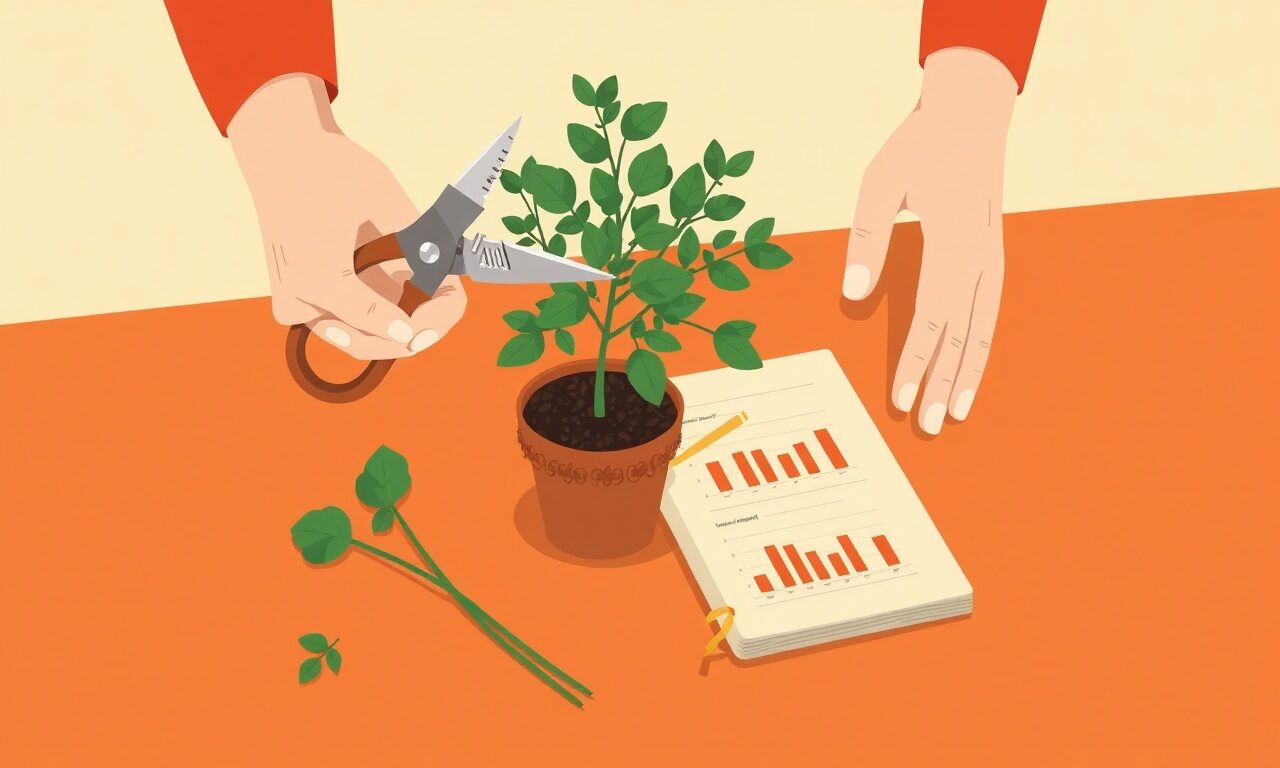
Scroll your own storefront on your phone, slowly, the way a stranger would. Somewhere around the fourth or fifth card you will hit one you feel slightly odd about. The thing you made two years ago in a different phase of the work. It still sells occasionally, so you have never removed it, and every visitor now has to walk past it to reach the product you actually want them to buy. That is the decision this piece is about, and per-product analytics can make most of it for you.
Why nobody prunes their own storefront
Removing a product feels like admitting something. It also feels like throwing away money, because it does still sell, once a month, to someone. That reasoning is where most cluttered pages come from. The lost sale is easy to picture. The cost of keeping it is invisible: a visitor who scanned seven cards, felt mildly overwhelmed, and left.
The genuinely hard part is that you cannot see the cost of clutter in any dashboard, on any platform. Nobody can show you the buyer who did not buy because the page was busy. What you can see is whether each product is pulling its weight on its own terms, and whether the products you care about are getting the views they should. That is enough to decide with, as long as you decide deliberately rather than never.
There is a second trap: lifetime totals. A product that made $2,000 in its launch month two years ago still shows a handsome lifetime number, and that number will keep it on your page forever if you let it. Ask what it did in the last ninety days instead.
How the decision usually goes, and how it could go
The difference is not effort. It is having a rule you agreed to before you looked at the numbers.
| How it usually goes | What the numbers let you do |
|---|---|
| Keep everything, because it all made money once | Compare the last ninety days per product and rank them |
| Assume a quiet product is a bad product | Check views first: no views means a placement problem, not a quality problem |
| Feel guilty about the old thing and leave it up | Set a threshold in advance and apply it without renegotiating |
| Delete something on a bad day and regret it | Export the customer list first, so the buyers stay yours |
| Have no idea who bought the thing you are removing | See buyers and lifetime value per person in the customer list |
| Rebuild from scratch because the file is dated | Replace the file and everyone who already bought gets the new version |
Four checks, in this order
Do these once a quarter with the analytics window set to the last ninety days. It takes about twenty minutes for a page of six products.
The quarterly product audit
0/6A worked example from a six-product page
Imagine a page with six things on it. Over ninety days the top two make roughly $1,400 and $900. A coaching call makes $600 on four bookings. A free checklist has 300 claimers and no revenue. Then there are two old items: a $12 mini guide with 40 views and three sales, and a $35 pack from two years ago with 12 views and one sale.
The $35 pack fails on views before it fails on revenue, which is the interesting part. Twelve views in three months means people are not even reaching it, so removing it costs you almost nothing and buys back a card of attention. The $12 mini guide is a different case: 40 views and three sales is a healthy conversion rate for a small price, and it may be the step that turns free readers into buyers. Keeping it and giving it a clearer job is the better call. The free checklist stays on the strength of 300 claimers, all of whom landed in your customer list with a name attached. Two products looked equally weak on the revenue ranking, and only one of them deserved to go.
If your current setup cannot tell you which product earned what in the last ninety days, store.fan shows views, buyers and revenue per product, and charges no platform fee on any plan.
Try it freeThe mistake most people make
The mistake is treating retirement as the only option. Most tired products do not need removing, they need one of three cheaper things: a better position on the page, a rewritten promise, or a refreshed file. The third is worth dwelling on, because on store.fan replacing the file on a digital product updates it for everyone who already bought, so an update is a gift to past buyers rather than an awkward second edition. Try the cheap fix for a quarter, measure again, and retire only what fails twice. Deciding twice is slower and it is also how you avoid deleting something that was one paragraph away from working.
Keep your own copy of the file and export your customer list before you change anything. The customer list on store.fan builds itself from every purchase, membership and free download, and the CSV export is available on every plan including Free, so your relationship with those buyers survives whatever you do to the page.
There is no correct number, but there is a useful test: can a stranger tell within ten seconds what you mainly do? If the answer is no because there are eleven cards, the count is the problem. Many strong pages run three to five paid products plus a free one.
That is a life decision, not an analytics one, and the numbers will not rescue you from it. If you want to reduce it rather than end it, raise the price and let demand find the new level, then measure over a proper window before deciding again.
Product pages on store.fan are statically rendered with their own titles and descriptions and sit in your sitemap, so a page that ranks for something is doing real work. If a retiring product brings in search traffic, consider replacing its content rather than removing the page entirely.
A storefront is a set of choices about what a stranger sees first. Pruning is how those choices stay yours instead of being decided by whatever you happened to make in 2024. Set a date each quarter, run the four checks, and let the page get simpler as the work gets better. If you want to see how the page itself is put together, the store designer covers layouts, themes and cover photos on every plan, including Free.
Start a free storefront, put up the three things you actually want to sell, and let the analytics tell you when it is time to add a fourth.
Build your pageTurn your knowledge into income
Launch your Store.Fan in minutes — sell digital products, courses, and calls straight from your bio. Free to start.