Should you add a tip product, and how to tell if your audience fits
Tips suit some audiences and quietly cheapen the page for others. How to tell which one you have, and where to put the card if you do.

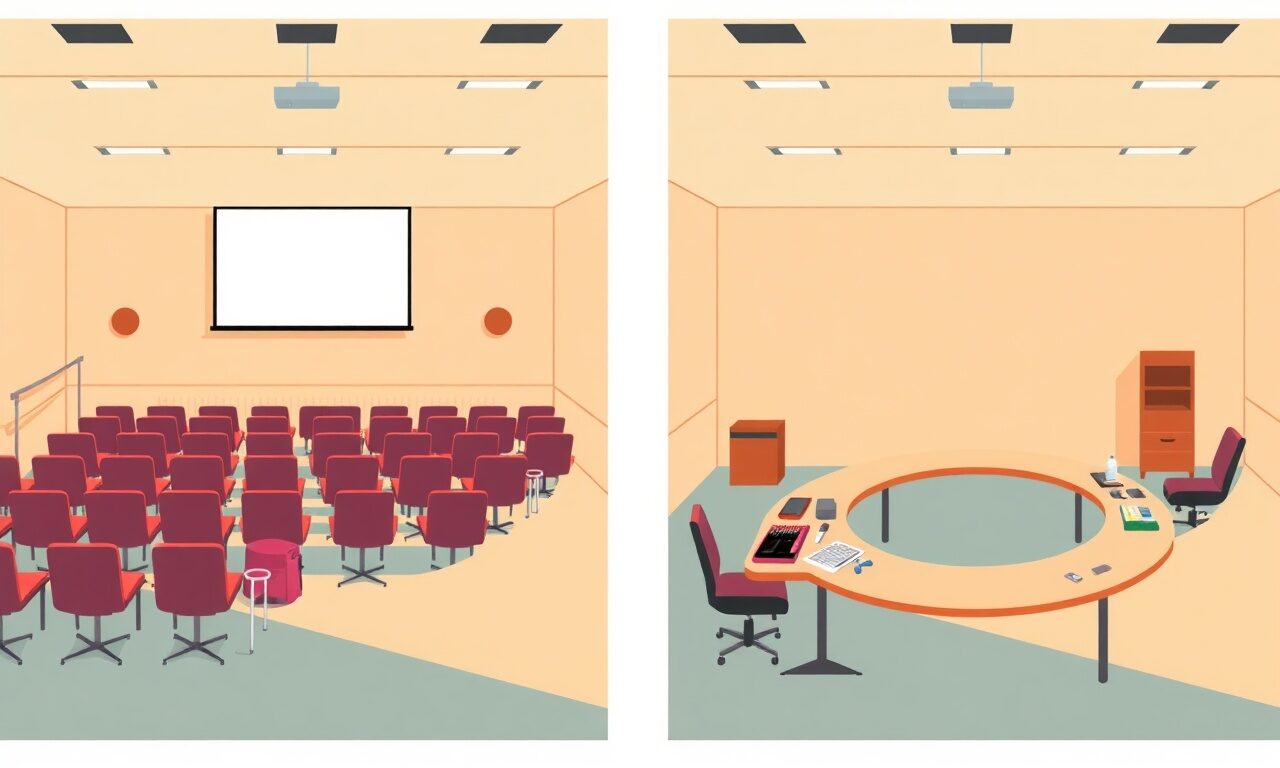
Two people add a tip card to their page in the same week. One of them writes a free weekly essay that a few thousand people read on a Sunday, and within a month the card is quietly paying for the hosting and a decent lunch. The other sells a nine-hundred-pound consulting package, and the tip card sits under it looking like a busker's hat outside a solicitor's office, doing no harm exactly, except that it is the only thing on the page a certain sort of client will remember. Same feature, same week, opposite results. The difference is not the wording. It is what the page is for.
What a tip card is actually saying
A tip is a payment with no defined product attached. That is its whole nature, and it means the card is not really asking for money, it is making a statement about the relationship: I give you things, you may give me something back, neither of us is being invoiced. For a certain sort of audience that statement is warm and correct.
For another sort it is a category error. If somebody has come to your page to evaluate whether to spend a serious amount on your professional services, a tip card tells them you are the kind of operation that accepts small unstructured donations. That impression is not fair, and it is not something a well-written label fixes, because they are reading the page as a whole rather than each card in isolation.
The uncomfortable part is that you cannot really A/B test your way to the answer, because the cost of a badly placed tip card is invisible. Nobody writes to tell you that they were going to enquire about the retainer and then decided you seemed small-time. You only ever see the tips that arrive, never the enquiries that did not, which means the feature always looks like it is working slightly better than it is.
Asking in a caption, versus a card on the page
If you have decided your audience fits, the mechanics matter less than you would think, but they are not nothing.
| Asking for support in a caption | A tip product on your storefront |
|---|---|
| The ask expires when the post scrolls away | The card is there on the day somebody feels like it |
| You repeat the request, and repeating it grates | You ask once, in a description, and never again |
| Money arrives by transfer, with no record of who | Tippers appear in your customer list with lifetime value |
| No way to suggest an amount without seeming grabby | Set the figure as a product price and let it sit quietly |
| Support competes with your actual products for attention | The tip sits below the things you sell, in its proper place |
| Nothing to measure | Per-product analytics show views and buyers for the tip too |
Three questions that decide it
Answer these honestly rather than optimistically. Two clear yeses means add one. Two noes means do not, and the page will be better for the omission.
- 1Do you regularly give something away that people consume and finish? Essays, tutorials, transcriptions, mixes, maintained open files. Tips follow completed free value. If everything you make is behind a price, there is nothing for a tip to be a response to.
- 2Would a stranger looking at your page describe you as a person or as a firm? Tips fit people. They sit awkwardly beside anything that presents as an agency, a practice or a studio with staff, because tipping an organisation is a category most buyers do not have.
- 3Is your highest-priced product under about a hundred pounds? Below that, a tip reads as of a piece with everything else on the page. Well above it, the tip is the odd one out, and the odd one out is what people remember.
If yes: where the card goes
Placement is most of the outcome. The whole storefront designer, with its 28 themes and 11 layouts, is on the free plan, so arranging this properly costs nothing but ten minutes.
Adding a tip without lowering the page
0/8The same card on two different pages
Take the essayist. A few thousand readers a week, everything free, no products at all. A tip card at a small fixed amount collects from a very small share of readers, which even so may amount to a real monthly figure, and more usefully it identifies the handful of people who paid when there was nothing to buy. That is the shortest and warmest list they own, and it is the obvious place to start when a paid archive or a book eventually appears.
Now take the consultant, whose page carries a diagnostic download, a paid template pack and a bookable strategy session. The tip card might bring in a few small payments a month. Against that, every prospective client evaluating a four-figure engagement sees it. There is no way to measure what that costs and there is no reason to find out, because the same page real estate could hold something that actually fits: a second lead magnet, a paid webinar, a lower-priced entry product for the people who are not ready for the big one. The tip is not wrong. It is just the least valuable thing that could occupy that space. These are illustrative situations rather than results anybody is promising, but the judgement they point at is sound: ask what else that card could be.
Ten product types share one page, so you can try a tip card, look at it properly, and remove it in a minute.
Build your pageThe mistake: a tip standing in for a price
The version that does real damage is not a tip card in the wrong niche. It is a tip card used to avoid naming a price. You have made something genuinely good, you cannot face charging for it, so you release it free with a note about tips and tell yourself the market will decide. What the market decides is that free things are free. You get a fraction of the revenue a modest price would have produced, and worse, you learn nothing, because the response to a tip jar tells you nothing about whether anyone would pay for the work. Charge for finished things. Tip for the ongoing, unpriceable stream around them. The moment you notice yourself hoping the tips will make up for not charging, you have found the real problem, and it is a pricing problem wearing a friendlier hat.
Yes, by creating two or three separate tip products at different figures. Most people find a small set of named amounts easier to act on than one open box, because it removes the awkward question of what an appropriate number is.
They do. Per-product analytics cover views, buyers and revenue for each product, and every tipper joins your customer list with lifetime value tracked. Which is arguably the better reason to run one: it identifies your most committed readers.
If people are trying to support you regularly, yes, usually. A membership bills monthly or yearly, renews automatically and gives them something defined in return, which is a more comfortable arrangement for both sides than repeated voluntary payments.
Take it down for a month and see whether anything you care about changes. It is one product on a page you control, and nothing about removing it is permanent or visible to anyone who was not looking closely.
The question is never whether tips work in general. It is whether a tip belongs on your page, next to your other things, in front of the people who actually come to it. If you give away something finished every week and you present as a person, add one and put it at the bottom. If your page exists to sell serious work at serious prices, leave it off and use the space for something that carries its weight. Either way it is ten minutes of work, and you can see everything else that could occupy that slot on the features page, or check what each plan includes on pricing.
Set the page up the way you want it, keep the full designer on the free plan, and pay no platform fee on anything you collect.
Open your storefrontTurn your knowledge into income
Launch your Store.Fan in minutes — sell digital products, courses, and calls straight from your bio. Free to start.