The edit pass every AI e-book needs before you charge money for it
Facts, repetition, examples and the ending. A checklist you can run in one afternoon so the book you sell holds up when somebody reads it properly.
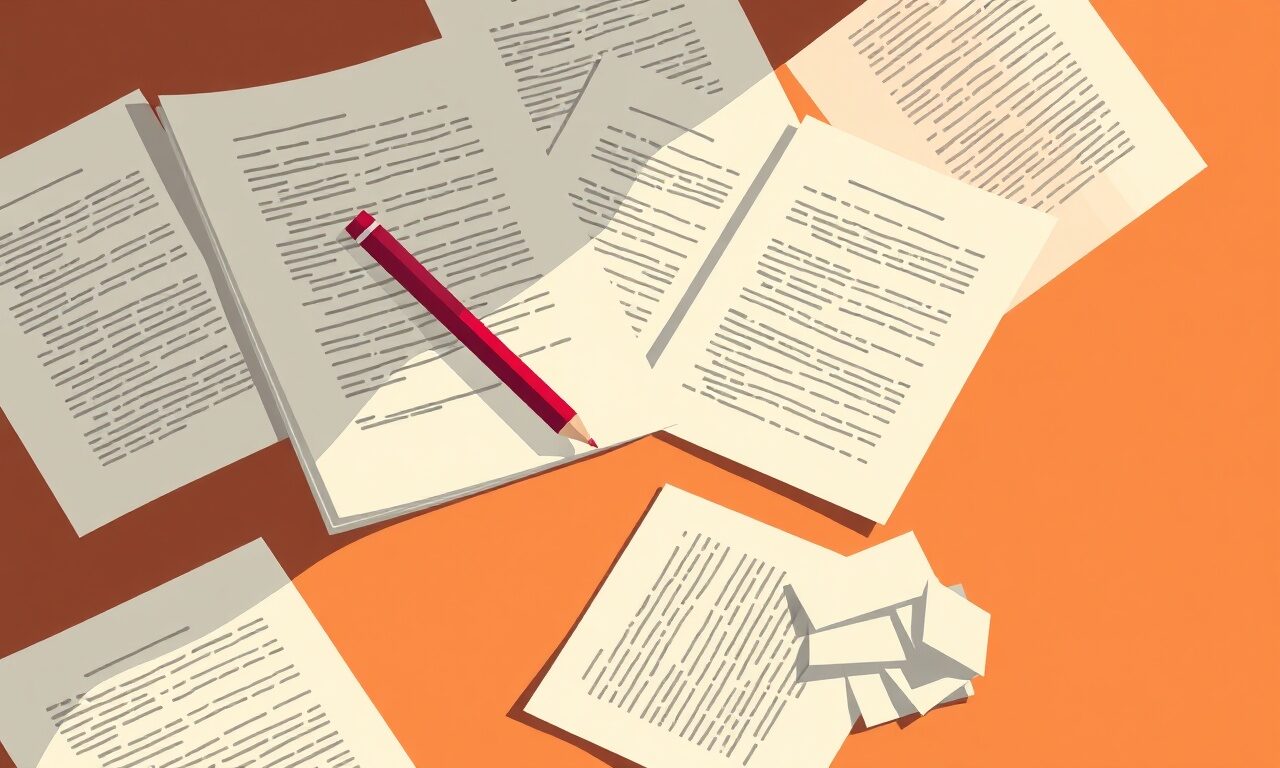
Most people read their own draft the way they read a menu. Eyes down the page, sentences look like sentences, tone seems right, done. Your buyer does not read it like that. Your buyer reads it on a Tuesday evening with a specific problem in their head, and they stop dead at the first paragraph that is vague, the second time you explain the same idea, and the number that does not sound right. One afternoon of proper editing is the difference between a guide people quote to their friends and a guide people quietly forget they bought.
Why a fluent draft is harder to edit than a rough one
A rough draft announces its problems. Sentences trail off, paragraphs contradict each other, and you can see the gaps. A draft out of the AI e-book studio does the opposite: it is even, confident and grammatical from beginning to end, which makes weak content very hard to see. The prose quality is uniform, so your eye stops using prose quality as a signal, and you skim.
The genuinely hard part is that the flaws are structural rather than local. There is rarely a bad sentence to fix. Instead there is a chapter that restates the previous chapter, an example that could describe anybody, a recommendation with no conditions attached, and an ending that summarises rather than sends the reader off to do something. None of those show up if you edit line by line, which is why the checklist below is organised by pass rather than by page.
The second hard part is emotional. Cutting feels like losing work, even when the work took eleven minutes to generate. A forty-page guide that answers one question completely is worth more than a seventy-page guide that circles it, and the seventy-page version is nearly always the same book with padding. Be willing to end the afternoon with fewer pages than you started.
Fixing a book after it is out
Editing before you list is cheaper than editing after, but the reason people rush is that fixing things after launch has traditionally been miserable. It does not have to be, and knowing that changes how nervous you need to be about the whole thing.
| Fixing a guide the usual way | Fixing it on store.fan |
|---|---|
| Find the buyers in an old inbox thread and email a new attachment | Replace the file on the product and every existing buyer sees the new one |
| Old attachments stay on people's phones forever | Buyers return to a private order page that always shows the current file |
| Version two becomes a separate purchase, or an awkward free gift | There is no version two — it is the same product, updated |
| No way to know who has the old copy | Your customer list holds every buyer of that product, including free downloads |
| Corrections announced in a post most people miss | You can email buyers about the update from the dashboard on Pro |
| Fear of errors delays the launch for weeks | The cost of a mistake is one file upload, which makes shipping reasonable |
The four-pass checklist
Four passes, in this order, because each one changes what the next one is looking at. Do not mix them — trying to check facts and tighten sentences at the same time is how both jobs get done badly. Budget roughly three hours for a forty-page guide.
Run these in order
0/7What an afternoon actually removes
Imagine a fifty-page guide for freelance photographers on pricing wedding work. Pass one produces nine marks, seven of them in the middle third. Pass two finds four unsupported figures about average industry rates and one confident claim about contract law that you are not qualified to make; all five come out. Pass three shows that chapter two and chapter five are both about the psychology of quoting, so they become one chapter. Pass four replaces three anonymous examples with the actual quotes you sent last summer, prices included.
What comes out the other end might be thirty-eight pages instead of fifty. It is a shorter book that a photographer would finish in one evening, with three real quotes in it that nobody else can publish. That is the version worth listing on your storefront at a real price. Whether it sells depends entirely on who sees it and how much they trust you — the edit does not create demand, it just means the guide survives being read.
Set up a free store.fan page and get a product ready to list while you edit.
Create your free pageThe mistake most people make
They edit for style and leave the structure alone. Tightening sentences is satisfying, visible and almost entirely beside the point, because generated prose is already smooth. The three things buyers actually complain about are repetition, vagueness and being told something they already knew, and all three live in the structure. If you only have an hour, do pass three and pass four and skip the polish.
The other version of this mistake is waiting for the book to be perfect. There is no perfect, and the file replacement behaviour means a correction later costs you one upload rather than an apology and a refund round. Run the four passes, list it, and fix what real readers find.
Roughly three hours for a forty-page guide if you keep the passes separate. It goes badly over that when people try to rewrite rather than cut.
One person from the audience you wrote it for is worth more than three friends. Ask them to mark where they stopped reading rather than to give an opinion — opinions are polite, marks are useful.
Fix the file and replace it on the product. Everyone who already bought sees the updated file on their private order page, so there is no version two and no re-sending.
Not automatically. People pay for the problem solved, not the page count. Price it against the value of the outcome and be honest about the length in the description so nobody feels misled.
The draft is the cheap part now. The editing is where your name gets attached to something, and it is the part nobody can do for you. Three hours, four passes, then list it. If you want to see how the pieces fit together first, the features overview and the FAQ cover the delivery side.
Every plan charges 0% platform fee and pays straight into your own Stripe account, so a first guide costs you nothing to put up.
Open your storefrontTurn your knowledge into income
Launch your Store.Fan in minutes — sell digital products, courses, and calls straight from your bio. Free to start.