
🏺 Creative practice · E-book
A Year in Clay
Throwing, trimming and glazing your way to work you would keep
An e-book
A Year in Clay
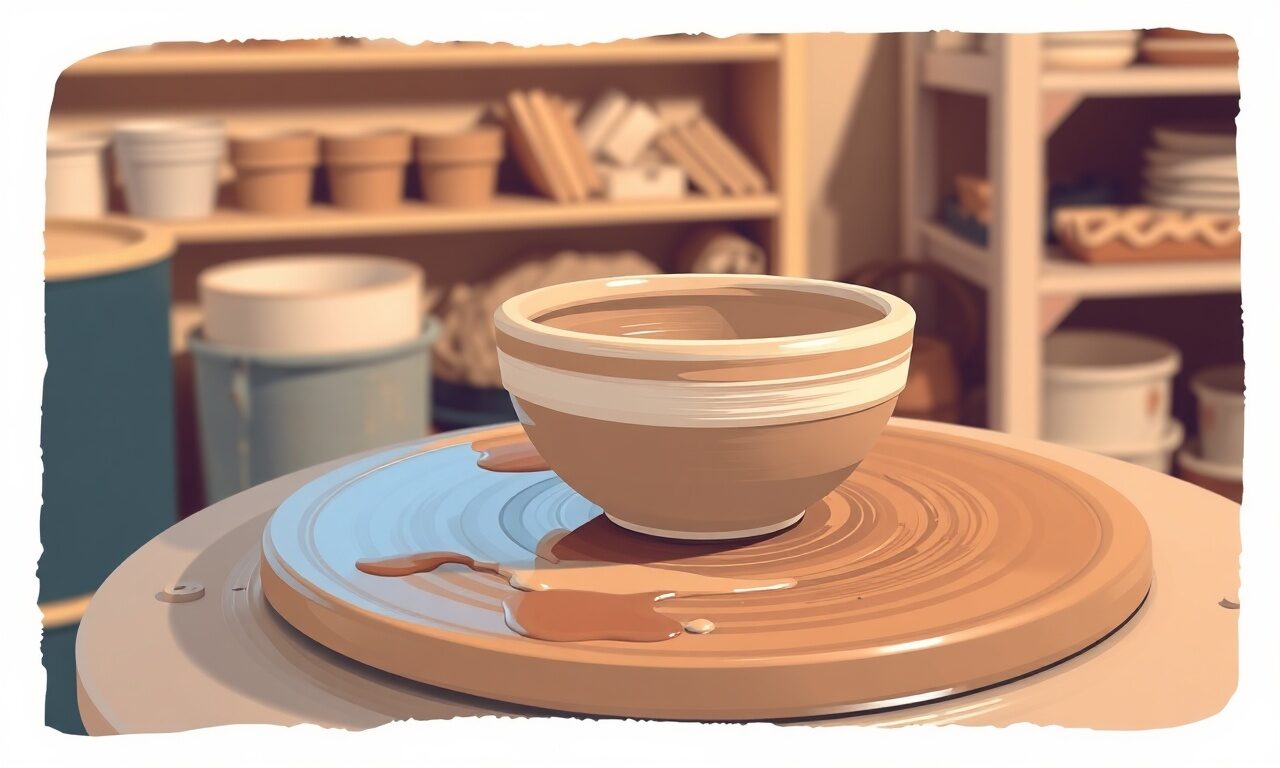
Throwing, trimming and glazing your way to work you would keep
Your name
A4 · this is a layout preview in the “Editorial” design. When you generate, the studio writes every chapter in full, paints the cover and chapter art, and composes a downloadable A4 PDF with your name, bio and store link on it.
Clay rewards repetition more than ambition. The pot you can make fifty times is worth more than the one you managed once. This book follows a year of steady practice, from the first properly centred lump to a shelf of pots that match each other.
What's inside
- 1Clay Bodies and What They WantCompares porcelain, stoneware and grogged bodies by how they behave under the same hands. You will choose one body for the year and know why you chose it.
- 2Centring Without a FightBreaks centring into posture, bracing and pressure, with a diagnosis list for every kind of wobble. You will be able to centre a kilogram reliably and know what to change when you cannot.
- 3Pulling Walls, Making FormsCovers opening, the first pull and the shape decisions that follow, with cylinders as the practice form. You will be able to make an even-walled cylinder and turn it into a beaker, jar or vase.
- 4Trimming and the FootDeals with leather-hard timing, chucks and the foot ring that decides how a pot sits and feels. You will trim a pot to an even weight without cutting through the base.
- 5Handles, Spouts and AttachmentsPulls handles by hand, scores and slips joins properly and gets the angle right on a spout. You will make a mug whose handle is comfortable and survives drying without cracking.
- 6Glaze as Choice and ChemistryExplains what a glaze is made of, how thickness changes everything and how to test properly on tiles. You will build a small tested palette of three glazes you trust.
- 7Firing, Faults and What to KeepCovers bisque and glaze firings, common faults and the discipline of keeping only the good pots. You will read a kiln load honestly and take three lessons from it into the next batch.
A sample from chapter one
Clay Bodies and What They Want
Clay is not one material. A smooth porcelain and a grogged stoneware behave so differently on the wheel that the same hand pressure gives you two different pots. Groggy clay stands up, takes texture and forgives uneven drying. Porcelain rewards a light touch and punishes hesitation. Choose the body for what you want to make, then learn its habits before changing again.
Water is the other half of the conversation. Too little and the clay drags and tears; too much and the walls soften and collapse on the third pull. Most beginners over-water because they are working slowly. Speeding up slightly, with fewer and more decisive movements, usually solves a problem that looks like a clay problem.
- Wedge until a cut section shows no air pockets and an even colour throughout.
- Weigh every ball, because the same weight each time is how you learn a form.
- Keep a damp sponge in reach and use it instead of dipping your hands.
- Dry work slowly under plastic, since most cracks are drying faults rather than throwing faults.
Key takeaways
- A clay body has habits, and learning one body well beats sampling five.
- Most collapse on the wheel comes from too much water and too many passes.
- Weighing your clay turns repetition into measurable practice rather than guesswork.
The studio writes every chapter from this outline, paints the art and hands you a PDF you can sell the same afternoon.
Start free