
✏️ Creative practice · E-book
The Daily Drawing Page
How a small, stubborn habit becomes a body of work
The Daily Drawing Page
Your name
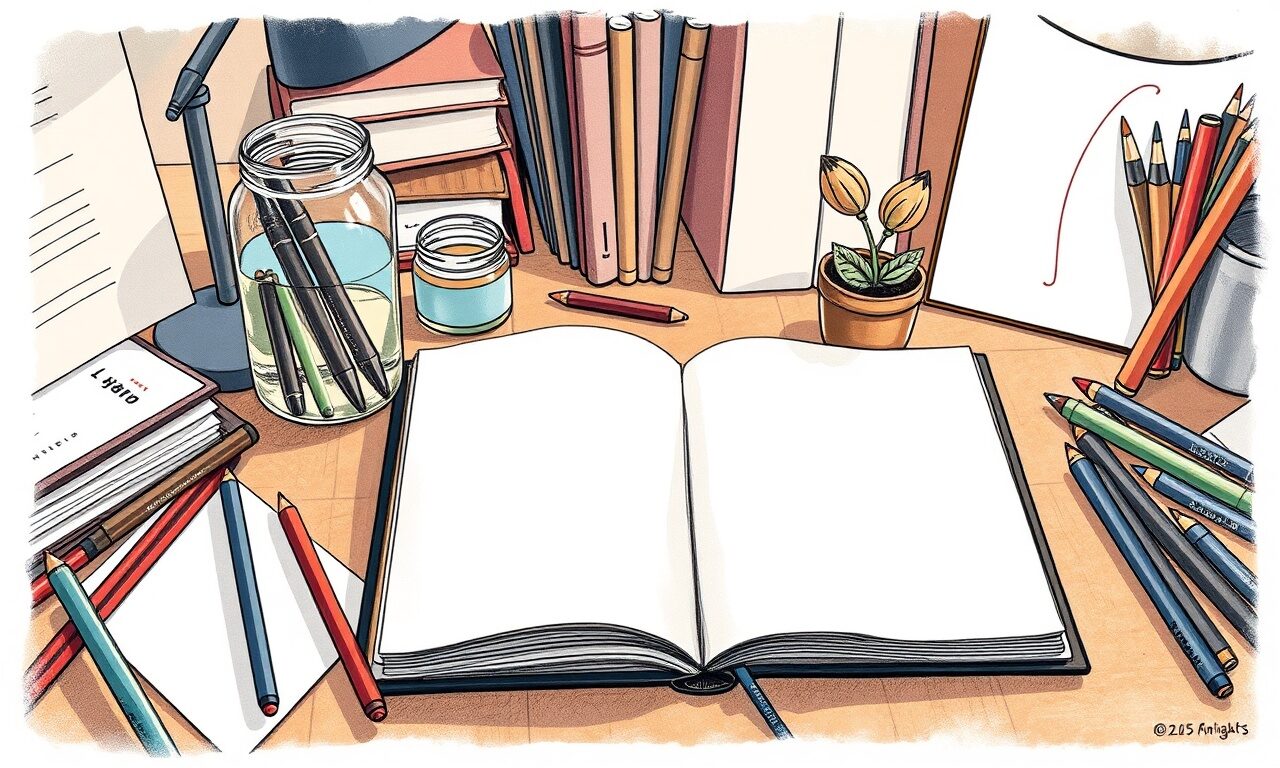
A4 · this is a layout preview in the “Split” design. When you generate, the studio writes every chapter in full, paints the cover and chapter art, and composes a downloadable A4 PDF with your name, bio and store link on it.
A drawing practice is not talent arriving on schedule. It is a page a day, most days, kept somewhere you can see it. This book is about making that page small enough to survive a bad week and interesting enough that you want to come back to it.
What's inside
- 1One Page, Ten MinutesSets up the habit at a scale that cannot be missed and explains why ambition is the usual reason daily drawing collapses. You will leave with a format, a timer and a first week of pages.
- 2Line Before EverythingWorks through line weight, speed and confidence with drills that take three minutes each. You will be able to vary a line deliberately instead of hoping it comes out well.
- 3Shapes You Can RepeatBreaks objects, animals and people into a handful of reusable shapes so drawings hold together before detail arrives. You will be able to build a new subject from shapes you already own.
- 4A Palette of SixLimits colour to six chosen pigments and shows how a restricted set produces harmony without effort. You will finish with your own six and a set of swatch tests to prove they work together.
- 5Drawing From Life in PublicPractical tactics for sketching in cafes, trains and waiting rooms without attracting attention or freezing up. You will be able to fill a page in a place you did not choose.
- 6Where Style Comes FromExplains style as accumulated preference rather than a decision, using your own pages as the evidence. You will run a review of a month of drawings and name three habits worth keeping.
- 7Turning Sketches Into Finished WorkTakes one sketchbook page through redrawing, colour and final artwork ready to print or send. You will finish with a repeatable route from scribble to a piece you would show.
A sample from chapter one
Make the Page Too Small to Skip
A daily page fails when it is ambitious. Ten minutes and one A5 side is a promise you can keep on a bad Tuesday, and keeping it is the whole point. The drawings will be uneven for months. That unevenness is data: it shows you which marks come easily and which you avoid, which is more useful than a run of tidy pages.
Keep the book open on the table rather than closed in a bag. A closed sketchbook asks you to decide to draw; an open one only asks you to sit down. Work in pen if the pencil makes you hesitate, and never turn back to fix yesterday. The page is a record of one day, not a portfolio piece in waiting.
- Draw what is within arm's reach first: keys, a mug, your own shoe.
- Set a ten-minute timer and stop when it goes, mid-line if necessary.
- Use one pen for a fortnight so the tool stops being a decision.
- Date every page in the same corner, because the dates become the evidence.
Key takeaways
- A daily page works because it is small enough to keep, not because it is good.
- Drawing in pen removes the option of tidying and speeds up how fast you learn.
- Reviewing a month of pages tells you what your natural subjects already are.
The studio writes every chapter from this outline, paints the art and hands you a PDF you can sell the same afternoon.
Start free