The address was wrong: a calm recovery plan that keeps the sale
Typos survive even the best dropdowns. Here is the order to work in when a parcel bounces, and how to decide who pays for the second delivery.
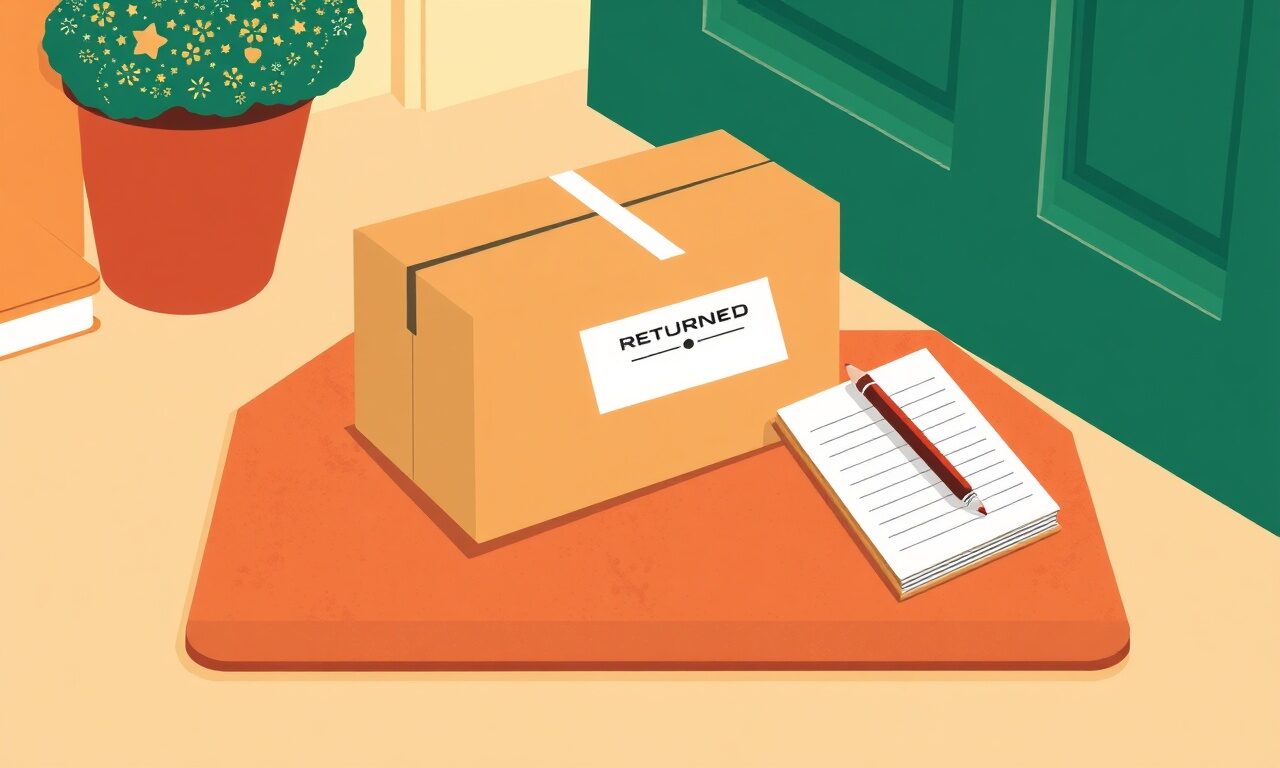
Three weeks after you posted it, the parcel is back on your doormat with a sticker on it and a corner dented. Somewhere in those three weeks the buyer went from excited to quiet to slightly cold. You check the order: the street is right, the town is right, and the flat number is missing entirely, because the buyer types their address from memory forty times a year and the flat number is the bit their friends already know. Nobody lied. Nobody was careless, exactly. The parcel still cost you twice.
Why the address was wrong in the first place
Structured address collection removes a whole family of errors. A checkout with real country and region selection stops people inventing a province, misspelling their own county or leaving the postcode in the wrong field. store.fan collects across 250 countries with official region lists for 33 of them, and districts in Turkey, which is why the errors that survive are rarely geographical.
What survives is the human layer. The flat or apartment number. A building name the carrier needs but the buyer considers optional. An office address given on a Friday when the buyer will not be there until Monday. A house that has a name and a number, only one of which the postman uses. None of these can be validated by software, because all of them are perfectly plausible addresses that simply are not complete.
The other honest difficulty is timing. You find out about the failure late, sometimes weeks late, and by then the buyer has moved on emotionally. Your recovery has to do two jobs at once: get the parcel there, and repair a small amount of trust that has already leaked away.
The difference a record makes
Most of the pain in a failed delivery is not the postage. It is the ten messages spent establishing what was actually submitted, in what order, and by whom. When the address, the order, the amount paid and the buyer's answers all live in one place, the conversation gets short.
| Sorting it out the usual way | With store.fan |
|---|---|
| Address lives in a DM thread you have to scroll back through | Address is stored with the order, exactly as the buyer submitted it |
| Corrected address arrives as a voice note or a screenshot | Corrected address collected through order-form questions on a $0 product, in writing |
| Second postage charged via an ad-hoc payment link | A small paid product priced at your postage cost, paid at the normal checkout |
| No idea whether this buyer has bought before | Customer list shows every purchase and lifetime value for that person |
| Refund handled by a platform that holds your money | Payments sit in your own Stripe account, so you refund on your own terms with 0% platform fee |
The sequence, in order
Do these in order and do not skip to step four, however obvious the answer seems. The first two steps are about facts and the rest are about choices, and mixing them is what turns a small logistical problem into a row.
- 1Open the order and read the address as submitted. Do not rely on what you remember typing on the label.
- 2Compare it with the label you actually sent and with the carrier's reason for return, so you know whether the error was theirs, yours or the carrier's.
- 3Message the buyer first, before they message you, and lead with the fact that you have the parcel safely in your hands.
- 4Send them a $0 product with order-form questions asking for the full address, including building or flat number and a contact phone number.
- 5Apply your written rule about who pays the second delivery, and say what the rule is rather than improvising a favour.
- 6If they are paying, point them at a small reship product priced at your postage cost so the payment runs through the normal checkout.
- 7Post it, tracked this time, and send the tracking number yourself.
- 8Update that person's entry in your customer list with a note, so the next order goes out to the corrected address without a second thought.
One rule, applied evenly
Say you sell a £34 candle set with a £5 flat delivery fee, and your real postage is £4.30. A parcel comes back because the flat number was missing. Your written rule reads: if the address as submitted was incomplete, the buyer covers the second delivery at cost; if we mislabelled it, we cover it. So you message, apologise for the wait without accepting blame you do not own, and point them at a £4.30 reship product. Most people pay it without comment, because they know which bit they got wrong.
The exception you allow yourself is the one the numbers justify. If the customer list shows this person has bought four times, you waive the £4.30 and say so explicitly as a one-off for a returning buyer. That is not softness; it is spending £4.30 on somebody whose lifetime value is already several times that. What you are avoiding is the version where you waive it for whoever complains loudest and charge whoever is polite.
Sell physical goods with the address, the order and the buyer's history all in one place.
Start for freeThe mistake most people make
They refund immediately. It feels like the clean, generous move, and it is the one thing that guarantees you lose both the money and the customer. You are now out the original postage, the item is scuffed and back in stock, and the buyer has gone from wanting your thing to having a refund and no reason to return. Refunding is the right answer when the buyer has genuinely given up, not when they are simply waiting to hear from you. Ask first. Nine times in ten they still want the candle, and the entry in your customer list stays a customer rather than a reversal.
Not on the order itself. The submitted address stays as the record of what was given, which is what makes the conversation straightforward. Collect the corrected version separately with a $0 product and order-form questions, then post to that.
Create a small product priced at your actual postage cost — call it something plain like "Reship postage" — and send the link. It runs through the same checkout, the money lands in your own Stripe account, and it shows up in your records as a real order rather than a side transfer.
Tracking does not stop a wrong address, but it does tell you where the parcel stalled, which shortens the recovery. If you switch to tracked, raise the flat delivery fee to match. It is shown before payment and survives discount codes, so the postage you charge is the postage you keep.
Send them the address exactly as it appears on the order, without commentary. Usually that settles it, because they can see the missing line themselves. If the label genuinely differed from the order, that one is yours to pay for and worth saying so quickly.
A returned parcel is not a lost sale. It is a sale that has been paused by a missing line of text, and the buyer is usually as keen to fix it as you are. Keep the facts in one place, decide the money question in advance, and the whole thing becomes a fifteen-minute job rather than a bad week. The FAQ covers the mechanics of orders and refunds, and the pricing page shows what you get without paying anything.
Set up your first physical product and see how the order record looks from both sides.
Create a storeTurn your knowledge into income
Launch your Store.Fan in minutes — sell digital products, courses, and calls straight from your bio. Free to start.