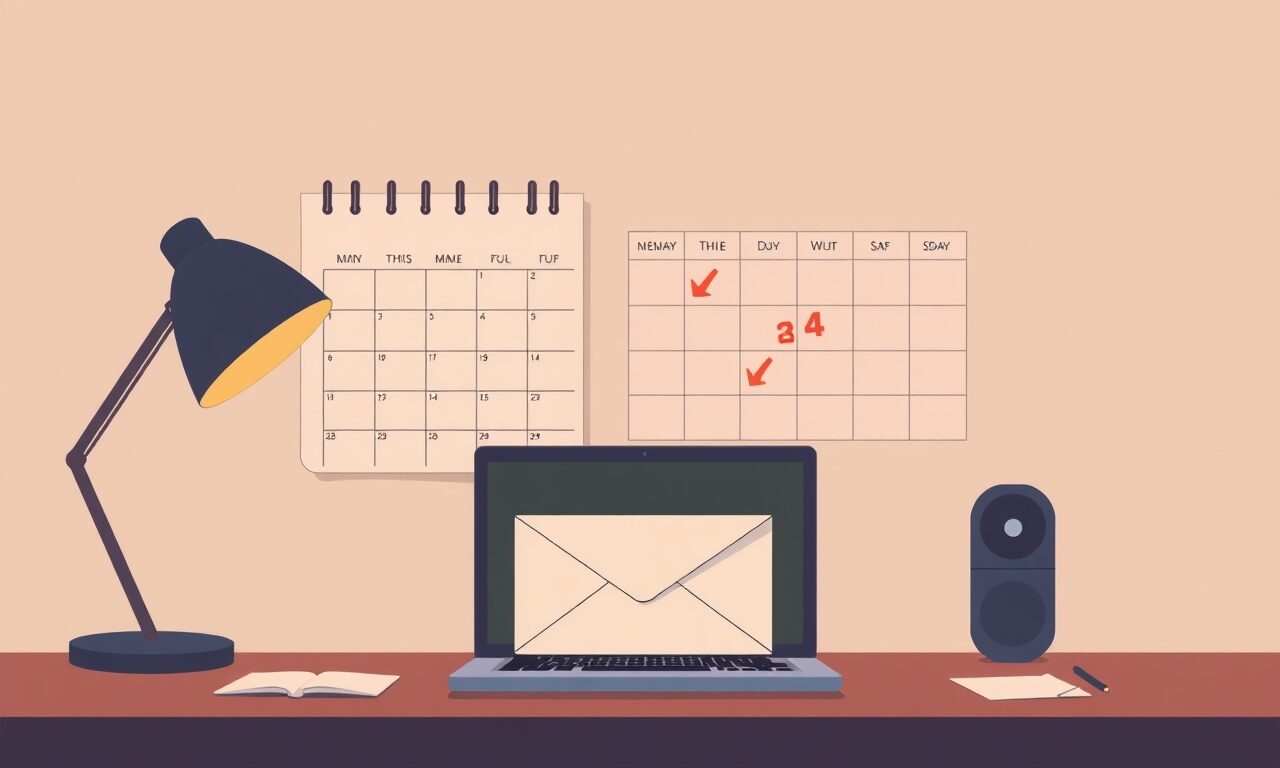
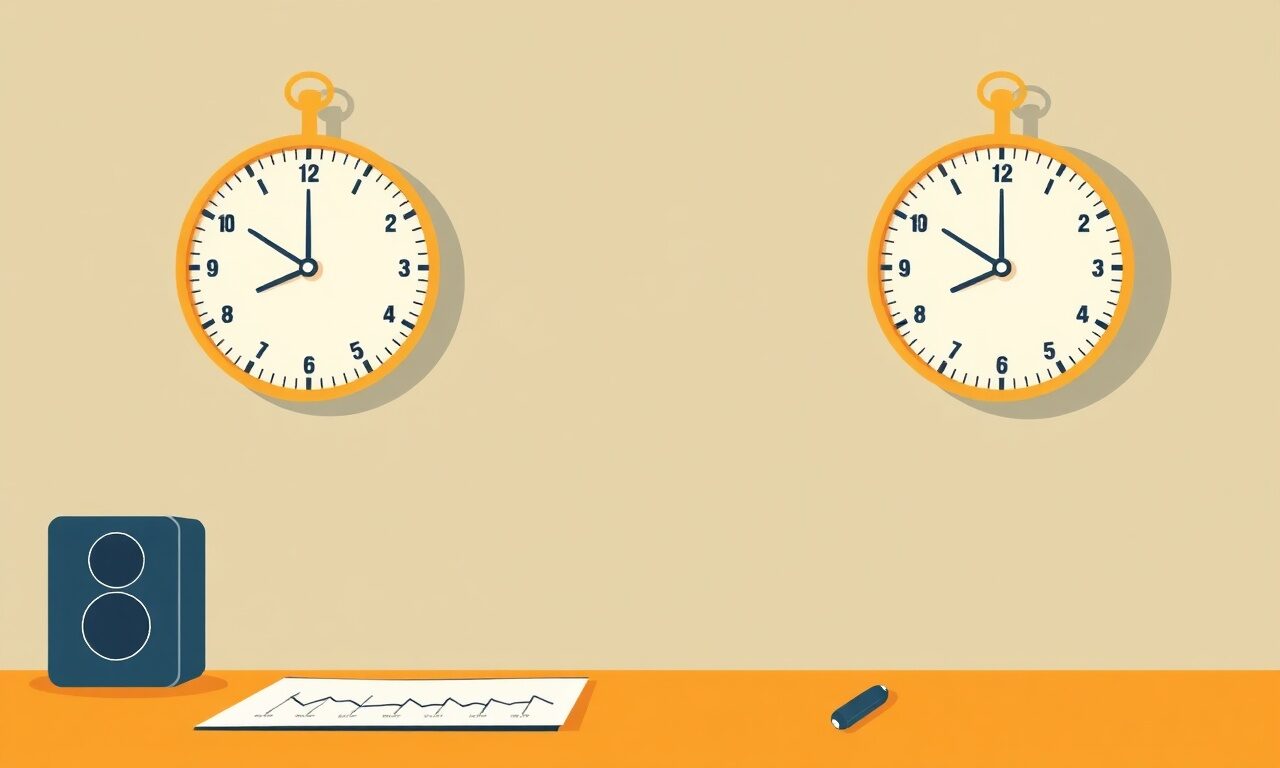
The Two Clocks Problem: Why Your Brain Wants Results in Days but Your Business Runs on Years
Your nervous system is wired for instant feedback, but every real creator business runs on a multi-year clock — here's how to stop letting one sabotage the other.
You post a reel on Tuesday. By Tuesday night you know if it worked. You send a check-in text and get a reply in ninety seconds. You refresh your analytics twice before lunch, not because you're undisciplined, but because your brain is running on a clock that measures success in minutes. Then you launch a product, and it does okay but not amazing, and after eleven days you start wondering if the whole thing was a mistake. Here's the uncomfortable truth nobody puts on a slide: your dopamine system and your business run on two completely different clocks, and almost every creator who quits early quits because they mistook the fast clock's silence for the slow clock's verdict. This isn't a willpower problem you can white-knuckle your way through — it's a mismatch between two systems that were never designed to run on the same schedule, and once you can see that clearly, a lot of the anxiety around slow weeks starts to lose its grip.
Why your brain is built for the wrong clock
Every notification you've ever gotten — a like, a comment, a DM reply — trains your brain to expect feedback on a timescale of seconds. That's not a character flaw, it's basic neuroscience: dopamine fires on prediction and immediate reward, and social platforms are engineered to exploit exactly that loop. The problem is that a creator business doesn't run on that loop at all. Building an audience that trusts you enough to buy, building a product good enough to get reviewed and shared, building the kind of reputation that makes someone recommend you unprompted — none of that happens on a notification timescale. It happens on a compounding timescale, more like a garden than a slot machine. You water it consistently for months, and then one week it looks like nothing changed overnight even though everything changed underneath.
This is the two clocks problem: fast clock, slow clock, running simultaneously, and most of the anxiety in a creator's life comes from checking the wrong one at the wrong time. You check the fast clock (today's views, today's sales) to answer a slow-clock question ("is this business working?"), and the fast clock simply isn't built to answer that. It's like checking a thermometer to find out what season it is — technically related, but the wrong instrument for the question.
Almost nobody quits because the slow clock said no. They quit because they kept asking the fast clock a question it was never built to answer.— store.fan team
What the two clocks actually look like, side by side
It helps to get concrete about which signals belong to which clock, because most creator burnout comes from treating a fast-clock signal like it's slow-clock evidence.
| Signal | Which clock | What it actually tells you |
|---|---|---|
| Likes, views, comments on a single post | Fast (hours) | Whether that one piece of content resonated today — nothing about your business's trajectory |
| A single product launch's day-one sales | Fast (24-72 hrs) | Whether your existing warm audience responded right now — not whether the product is good long-term |
| Email list growth over 8-12 weeks | Slow (months) | Whether your content is actually converting strangers into an owned audience |
| Repeat customers and reorder rate | Slow (months-years) | Whether people trust you enough to come back — the strongest predictor of a sustainable business |
| Search traffic to your store or content | Slow (6-18 months) | Whether you're building an asset that works while you sleep, instead of one that resets every post |
Notice the pattern: everything that actually determines whether you build a real income lives in the right-hand column, on a timescale your brain wasn't built to feel good about. That's not pessimism — it's just how compounding works. If you want a mental model that fits, think of your first year less like a sprint you're winning or losing daily, and more like laying pipe: nothing flows for a while, and then suddenly it all flows at once.
The three moments this mismatch actually costs you money
1. Quitting a product line after one quiet week
A creator launches a $39 template pack, sells six copies in week one, feels the fast-clock disappointment, and pulls it down or stops promoting it. But six copies in week one from a cold-ish audience is often exactly on pace for a product that does steady, unglamorous numbers for two years. The fast clock says "underwhelming." The slow clock, if you'd let it run, would say "early and normal."
2. Changing your entire niche every few months
Niche-hopping is a fast-clock decision dressed up as strategy. When growth feels slow, it's tempting to conclude the topic is wrong rather than the timeline is early. Most durable creator brands look, from the inside during month four, indistinguishable from a brand that's about to fail. The difference only becomes visible on the slow clock, usually somewhere past month nine or twelve.
3. Never raising your price because last month felt shaky
Pricing decisions made from a fast-clock mood ("sales were slow this week, better not risk a price increase") tend to lock in low prices indefinitely, because there's always a slow week to point to. The slow-clock question — has my audience, proof, and product quality grown over the last six months? — is the one that should actually decide your price, and it usually says yes far more often than your Tuesday-afternoon mood does.
How to actually feel the slow clock instead of just believing in it
Telling yourself "be patient" doesn't work for very long, because willpower is itself a fast-clock resource — it runs out. What works better is making the slow clock's progress visible, so you're getting real feedback on the timescale that matters instead of no feedback at all. This is a big part of why having an actual storefront, rather than just a scattered set of links, changes how sustainable this feels. A dashboard that shows this month against last month, total customers instead of today's views, gives your brain a slow-clock signal it can actually track — which quiets the urge to keep re-checking the fast one.
Building slow-clock evidence you can actually see
0/5This is also where the practical setup matters more than people expect. If your sales, your email list, and your product catalog are scattered across five tools and a stack of screenshots, there's no clean place to actually watch the slow clock — so of course you default back to checking likes. Consolidating into store.fan means your customer list, your discount codes, and your monthly sales trend all live in one dashboard you can glance at once a month instead of once an hour.
Reframes that hold up under real pressure
A few mental shifts tend to actually survive contact with a bad week, which is the real test of any mindset advice:
- "This isn't working" is a fast-clock sentence. The slow-clock version is "this hasn't compounded yet" — same data, completely different next action.
- A launch is a data point, not a verdict. One quiet week tells you almost nothing about month eighteen.
- Consistency beats intensity on the slow clock. Twelve months of showing up beats one incredible month followed by six quiet ones, almost every time.
- Your competitors' highlight reels are fast-clock content. You're comparing your slow-clock reality to their fast-clock performance, which is never a fair fight.
If you want to see what a slow-clock build actually looks like from the outside, a live example store is worth studying — the product mix, the content blocks, the discount structure all look like the product of many small, boring, repeated decisions rather than one lucky viral moment. That's usually exactly what it is.
Stop guessing at your slow-clock progress from scattered screenshots — open your store.fan and get one dashboard for sales, customers, and growth you can actually trust.
Start freeWhen fast-clock feedback is genuinely useful
None of this means ignore short-term data entirely — that's its own mistake. Fast-clock signals are excellent at telling you whether a specific headline, thumbnail, or price point beats another one right now. Use them for that, tightly scoped: A/B a product title, test two prices for a week, try a new hook on three posts. The error isn't using fast feedback — it's using fast feedback to answer slow questions like "should I keep doing this at all." Keep the two jobs separate and both clocks become useful instead of one sabotaging the other.
Give any new product at least 8-12 weeks of consistent promotion before deciding whether it works, and give a whole new store 6-9 months before judging the overall direction. Check the FAQ for setup specifics if you're still in the first few weeks and want to rule out technical issues rather than timeline issues.
Zero is different from slow — that's usually a distribution problem (nobody's seeing the offer) or an offer-fit problem (wrong product for the audience you have), not a patience problem. Audit where you're actually promoting the link and whether the price matches what your audience has shown they'll pay, then adjust one variable at a time.
Both — the mindset shift matters, but it's much easier to hold onto when you have real numbers to look at. Your dashboard shows monthly sales trends, customer counts, and repeat buyers over time, so you're tracking the slow clock with data instead of vibes.
Yes — if the fast-clock signal is a clear structural problem (broken checkout, no audience at all in that niche, a product that's technically impossible to deliver), fix or quit fast. The two clocks problem is about quitting a fundamentally sound, still-young business because a single quiet week felt like a verdict, not about ignoring genuine red flags.
Most creators who reach full-time income took somewhere between 12 and 30 months of consistent, compounding effort — rarely less, sometimes more depending on niche and starting audience. Treat that range as normal, not as a sign something's wrong if you're inside it.
The clock you're actually running on
Nobody builds a sustainable creator income by winning every week. They build it by surviving enough quiet weeks without concluding the wrong thing about them. Your brain will always want the fast clock's dopamine hit, and that's fine — it's not something to fight, just something to route around. Route it toward one place that shows you the slow clock's real progress, keep your promotion and product decisions running on that longer timeline, and let this month's silence be exactly what it usually is: not a verdict, just the sound of pipe being laid. The creators who eventually look like they got lucky almost never did — they simply kept feeding the slow clock while everyone around them burned out chasing the fast one, and by the time the compounding became visible from the outside, it had already been building quietly for a year or more underneath. For more on building that kind of durable, unhurried business, the blog has guides on the exact systems worth compounding first, and pricing lays out what it actually costs to get the slow clock a proper dashboard. If anything about the setup trips you up along the way, contact support — that's a fast-clock problem worth solving fast, so the slow one can keep running underneath it.
Turn your knowledge into income
Launch your Store.Fan in minutes — sell digital products, courses, and calls straight from your bio. Free to start.