Should you post abroad? A decision guide for very small shops
Customs forms, longer queues and one delivery fee that has to cover both. How to choose the countries you accept, and how to decline the rest politely.
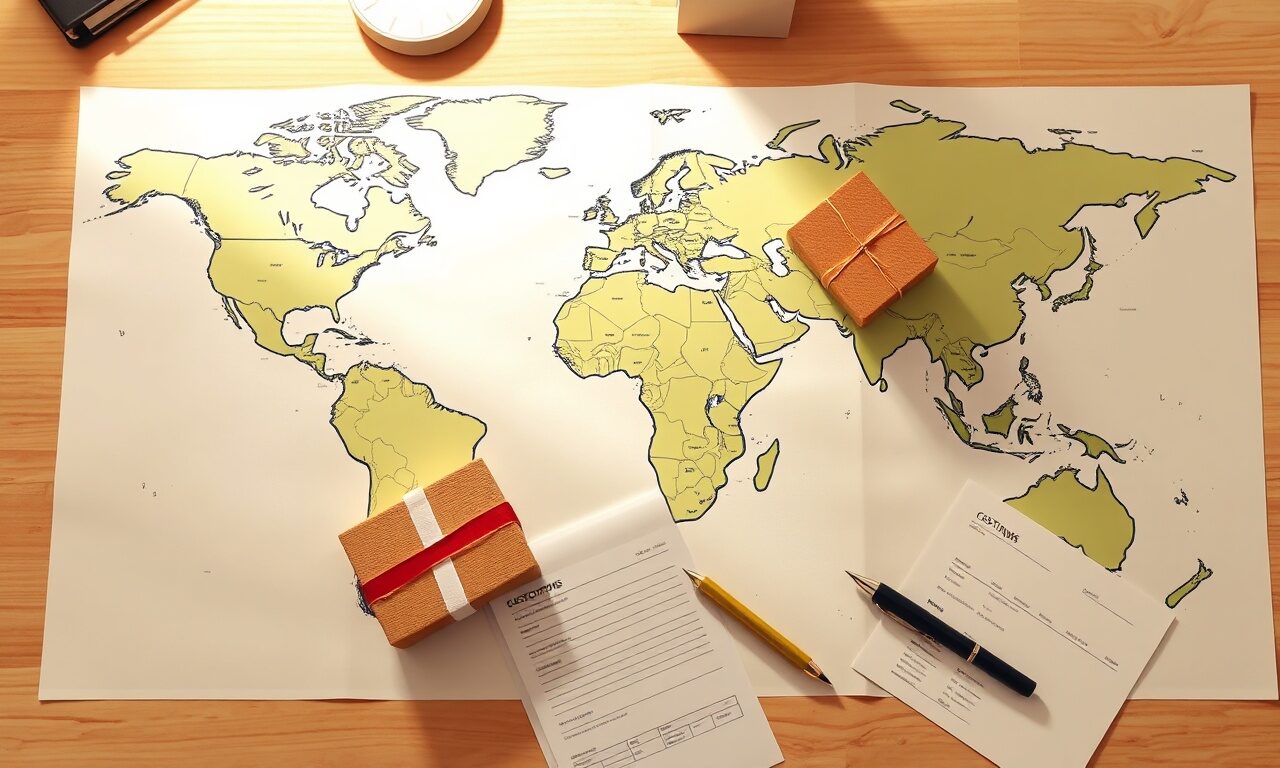
The first order from another country is a small thrill followed by a specific kind of pause. Someone eight time zones away wants the thing you made, and you are now working out whether the delivery fee you set with your own postcode in mind covers a parcel that has to cross an ocean, clear a customs desk and be handed to a service you have never dealt with. You will almost certainly post it anyway, because it is the first one. The question is what you do about the tenth.
What international actually costs you
Postage is the obvious cost and usually the smallest surprise. The larger ones are procedural. A customs declaration has to be completed accurately, with a description, a value and sometimes a tariff code, and getting it wrong can strand a parcel or land the buyer with an unexpected charge on their doorstep. That charge is not yours, and the buyer will still be unhappy about it, which is a support conversation you have not budgeted for.
Then there is time. An international parcel at the counter takes noticeably longer than a domestic one, and if three of them turn up on the same packing afternoon your queue lengthens by twenty minutes. And there is risk: the further a parcel goes, the more hands it passes through, and the less able you are to do anything useful when it stops moving.
The genuinely hard part is that none of this is knowable in advance for a country you have never posted to. You can read the rates. You cannot read how often a parcel to that country goes missing, or how aggressive its import charges feel to the person receiving them. That is why the sensible shape is a small list you widen with experience rather than a map you open all at once.
All-or-nothing, or a map you choose
Most small shops sit at one of two extremes: refusing everything outside their own country, or accepting everything and absorbing whatever happens. Neither is a decision so much as a default.
| The usual default | Choosing deliberately on store.fan |
|---|---|
| Domestic only, because international feels complicated | A named list of countries you post to, written on the product page |
| Or everything accepted, with postage costs discovered order by order | A flat delivery fee set from the furthest country you actually accept |
| Addresses collected as free text, which is where international deliveries fail | Full structured addresses across 250 countries, with official region lists for 33 of them |
| A discount code cuts the total, including the postage on a long-haul order | The delivery fee survives discount codes, so distance never gets discounted by accident |
| No idea which countries your buyers are even in | Per-product analytics show buyers and traffic source, so the list can follow the demand |
| Awkward refusals handled badly, weeks after the order | A written boundary before purchase, so most refusals never need to happen |
How to choose your list
Work through these in order. The whole exercise takes an evening, and it is the difference between a shop with a policy and a shop with a series of exceptions.
- 1Start with the countries you already have buyers in. Your analytics and customer list tell you where people are, so the first version of the map is descriptive, not aspirational.
- 2Price the packed parcel to each of those countries. Anything where postage is more than the item price is a candidate for exclusion, not because it is impossible but because the fee it forces is unsellable.
- 3Check what the customs declaration requires for your category. Some items are straightforward everywhere; anything liquid, edible or battery-powered deserves ten minutes of reading before you promise anything.
- 4Choose your furthest accepted destination, and set the flat delivery fee with that one in mind so the worst case is a known loss rather than a shock.
- 5Write the list into the product description in one plain sentence, naming regions rather than listing forty countries.
- 6Add an order-form question asking the buyer to confirm the country and any building or delivery notes, so you are not guessing at a form you cannot edit.
- 7Review the list every few months, adding one region at a time once the previous addition has proved itself over several orders.
How to decline without being cold
Occasionally an order will arrive from somewhere you do not post to, usually because the buyer did not read the line or read it and hoped. Deal with it the same day. Refund in full, and send one short message: you are a one-person shop, you post to a short list of countries at the moment, their country is not on it yet, and the money is already on its way back. No apology spiral, no explanation of postal economics.
This reads better than most people expect. The thing buyers dislike is being left in silence for a fortnight and then told no. A quick refund and a straight sentence usually gets a friendly reply, and sometimes a follow-up purchase of the digital version instead, which is one good reason to keep a file-based product on the same page. The pairing is covered in more depth across the rest of the blog.
Collect proper addresses from anywhere, then decide for yourself where the parcels go.
Start your storefrontThe mistake most people make
The common error is treating international as a status symbol: worldwide shipping on the page because it sounds like a real business. It is not a real business if every third order costs you money and an hour. The opposite error is refusing everything forever because of one bad experience with a parcel that vanished. The middle position, a short list you extend on evidence, is unglamorous and correct. If you would like to see how the rest of the shop fits around it, the features overview and the pricing page both take about two minutes.
The address form supports 250 countries, with official region lists for 33 of them. Which orders you are willing to fulfil is a decision you state in your product description and enforce yourself, usually by refunding the rare order you cannot post.
The person receiving the parcel, under their own country's rules. Say this plainly in the description for international buyers so it is never a surprise on the doorstep.
You can set different products different fees, but a single item usually carries one flat fee. Most small shops set it from the furthest country they accept and take the loss on the longest journeys.
Downloads have none of these problems. They arrive instantly to a private order page wherever the buyer is, which is why a digital version of a physical product is a useful thing to have on the same page.
Posting abroad is not a moral question or a growth strategy. It is a list of places where the sums work and the paperwork is manageable, and that list is allowed to be short while you are one person with a kitchen table and a roll of tape.
Sell to anyone, post to the places that make sense, and keep 0% platform fee on both.
Open a free accountTurn your knowledge into income
Launch your Store.Fan in minutes — sell digital products, courses, and calls straight from your bio. Free to start.