Permission to stay small on purpose, and what that store costs to run
Not every creator business should grow. How to set a deliberate ceiling, and what it actually costs to keep a store at that size.
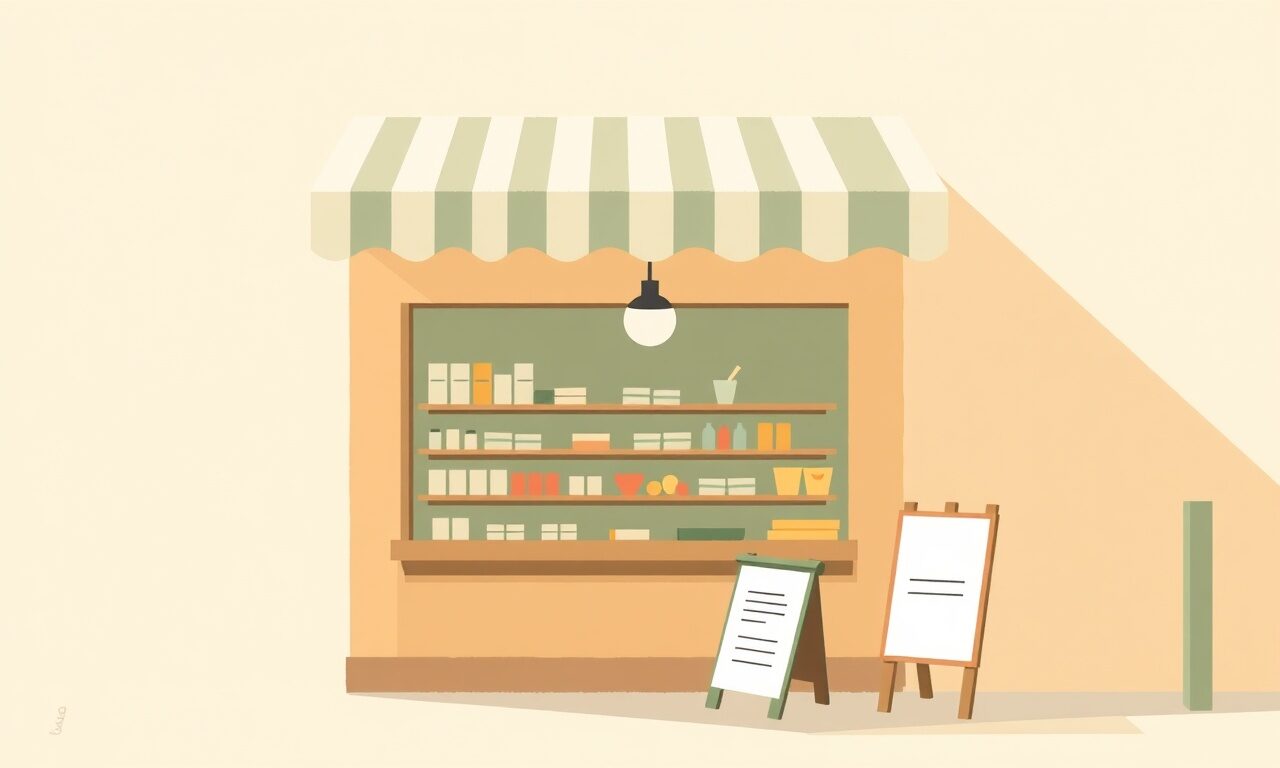
Somebody asks what is next for the business, and you notice you do not have an answer. Not because you are stuck, but because you do not want a next. The thing works. It pays for what you needed it to pay for. You know every customer by name and you rather like that. And yet you feel obliged to produce a growth story, because the entire genre of creator advice assumes that a business which is not getting bigger is a business going quietly wrong. It is not. Staying the size you are is a legitimate decision, and like any decision it has costs worth naming out loud.
Why the choice feels illegitimate
Almost everything written for creators is written for people at the start of a curve. That makes sense, because those people ask the most questions. But it means the default advice is always additive: another product, another channel, another tier, another list. Nobody writes the article that says you have enough products now. So when you decide you have enough, there is no vocabulary for it, and the absence of vocabulary feels like an absence of permission.
There is a harder reason too, and it is worth being honest about. Small is genuinely more fragile. A store with three products and 200 buyers has no redundancy. If the one product that carries you falls out of favour, or the platform sending you traffic changes its mind, there is nothing behind it. Growth is not just ego. It is, among other things, a way of buying insurance.
So the choice is not between growth and virtue. It is between a business that takes more of your life and holds more risk in reserve, and one that takes less and holds less. Both are defensible. What is not defensible is drifting into the smaller one while telling yourself it is temporary, because then you get the fragility without ever collecting the calm.
The story you have been told, and the version that fits
Set the two side by side and the trade becomes concrete rather than moral. Neither column is the right answer for everyone. The point is to know which one you are actually living in.
| The growth default | A deliberate ceiling |
|---|---|
| Success is measured by whether the number went up | Success is measured by whether the number stayed where you set it |
| Add a product whenever there is a gap in the ladder | Add a product only when it replaces one you are retiring |
| Open more booking slots as demand rises | Hold the slot count and let the price or the waiting list absorb demand |
| Every channel worth being on is worth being on | One channel you can maintain badly-but-consistently beats three you cannot |
| Hire, delegate, systemise | Stay inside what one person can run without a handover document |
| Reinvest most of what comes in | Take the money out, because that was the point |
How to set a ceiling you can actually hold
A ceiling only works if it is specific. "I do not want to get too big" survives exactly one good month. Numbers survive. Work through the checklist below, write the answers somewhere you will see them, and set your store up so the limits are structural rather than a matter of willpower.
Your ceiling, written down
0/7What small actually costs to run
Here is a plausible shape. Say your ceiling is around 30 orders a month across two digital products and four coaching calls. On store.fan there is no platform fee on any plan, so the deduction from each order is Stripe's own card processing fee, taken by Stripe, from money that lands in your own Stripe account rather than passing through us. On top of that you have your subscription, which is nothing at all on Free and a fixed monthly amount on Starter or Pro if you want full analytics, the AI e-book studio, discount codes or a custom domain.
That is the whole cost base. It is worth stating because the arithmetic of percentage fees works against small stores in a way people rarely notice: a cut of your revenue is a cut whether you are doing 30 orders or 3,000, and at 30 orders you have no volume to absorb it. A fixed monthly cost, by contrast, is the same number in a quiet month, which makes a small store much easier to plan. If you want to compare the two models properly, the true cost of a free plan versus zero fees lays out the arithmetic, and the pricing page has the current numbers.
If the store you want is a small one, start on the plan that stays free and see whether you ever need more.
Open a free storeThe mistake most people make
They set the ceiling on output but not on inputs. They decide they will not add more products, then keep saying yes to podcasts, collaborations, guest posts, and the occasional one-off client who is very persuasive. Six months later the revenue has obediently stayed flat while the workload has doubled, which is the worst possible combination and the reason people conclude that staying small does not work. It works, but only if the ceiling covers your calendar as well as your catalogue. Cap the commitments first, because they are the ones that arrive disguised as opportunities. The one thing worth letting grow without limit is your customer list, which builds itself from every purchase and free download whether or not you are adding products.
No. The link-in-bio page, unlimited link cards and the full storefront designer with its 28 themes, 11 layouts, 16 fonts and cover photos stay on Free indefinitely. Paid plans add features such as full analytics, discount codes and a custom domain, and they start with a 14-day free trial if you want to test them.
Not in platform fees, because there are none on any plan. You still pay Stripe's card processing fees, which are charged per transaction regardless of your size, and your subscription if you are on a paid plan.
Name the constraint rather than the preference. "I hold four calls a week and they are booked through to next month" reads as a business fact. "I am not really taking that on" reads as a judgement about them.
Nothing about a small store closes that door. Your customer list, products and order history stay where they are, and you can move up a plan whenever the features are worth it. Set a review date so the decision gets revisited on purpose rather than in a panic.
A business that has stopped growing on purpose is a strange thing to look at from outside, because it looks identical to one that has stalled. Only you can tell the difference, and the way you tell it is by having written the ceiling down. Do that, keep the numbers honest, and the question about what is next becomes easy to answer. Nothing is next. This is it, and it is working.
Build the small version properly: one page, a couple of products, no cut taken from your sales.
Start your storeTurn your knowledge into income
Launch your Store.Fan in minutes — sell digital products, courses, and calls straight from your bio. Free to start.