Making Fanzy AI copy sound like you and not like everyone else
AI drafts settle into a flat middle voice. Feed Fanzy your own sentences, then run the three-pass edit that puts your rhythm and your specifics back in.
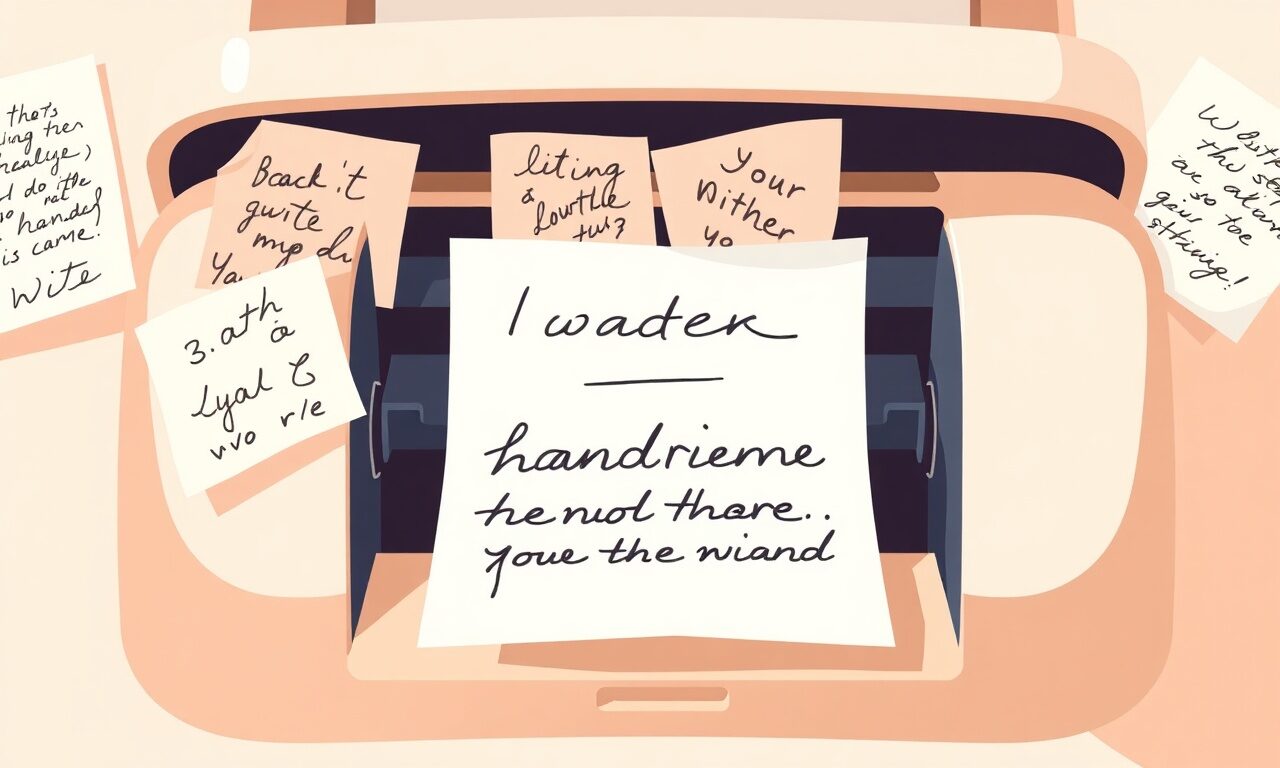
Read your storefront out loud. Not skim it — read it, at speaking pace, the way you would say it to someone standing in front of you. Most people get about two sentences in before something goes wrong in their mouth. The words are correct and the grammar is fine, and you would never, in your life, say any of it. That is the flat middle voice, and it is what any drafting tool produces when you have not given it anything of yours to work from.
Where the flatness comes from
A draft written without samples has to guess at register, and the safest guess is the average of everything. That average has recognisable habits: sentences of similar length, a preference for pairs ("clear and simple", "practical and proven"), abstractions where a number would do, and an upbeat close. None of it is wrong. All of it is anonymous, and anonymity on a storefront is expensive, because your page is competing with other pages selling roughly the same thing.
Telling Fanzy to be "conversational" does not help much. Conversational is itself an average. What actually moves the output is evidence: sentences you have already written, in the wild, to real people. You have hundreds of them sitting in your replies and captions, and you have never thought of them as a resource.
The genuinely hard bit is that many people do not know what their voice is, and cannot describe it. You are too close to it, and it does not feel like a style — it feels like just talking. The fix is not introspection. It is collection: gather the sentences and let the pattern be visible in the pile rather than in your description of it.
Instructing the tone, or showing it
There is a large difference between telling a drafting tool what you sound like and showing it. Description gets you an approximation of a category. Samples get you your own sentence structures back, which is a much stranger and more useful thing.
| Describing your tone in adjectives | Feeding Fanzy your own sentences |
|---|---|
| "Friendly but professional" — a category, not a voice | Ten real sentences, so the pattern comes from evidence |
| Even sentence lengths that read as competent and forgettable | Your actual rhythm, including the short ones and the run-ons |
| Abstractions where you would have used a number | The specifics you habitually reach for, because they are in the samples |
| Copy that could be lifted onto anyone's page | Copy that would look wrong on anyone else's page |
| A storefront voice that does not match your DMs | One voice across the page, your emails and your community feed |
| Endless tweaking of adjectives that changes nothing | Three structured passes with a clear stopping point |
Build the sample file first
This takes fifteen minutes once, and you reuse it every time you draft anything for the next year. Keep it in a plain note you can paste from.
- 1Collect ten sentences you wrote to a real person. Replies to buyers, a long caption, an answer in a group. Not marketing copy — the whole point is that these were written without an audience in mind.
- 2Include two you are slightly embarrassed by. The blunt one, the one with the aside in brackets. Those carry more voice than the polished ones and they are the first thing a tidy draft removes.
- 3Add three things you always say. A phrase your regulars would recognise, the way you open a message, the way you sign off.
- 4Add three things you never say. Words you will not have on your page — "journey", "hustle", whatever makes you wince. Prohibitions are unusually effective.
- 5Paste the lot into your brief for Fanzy, above the request, with one line: these are my own sentences, match this rhythm and vocabulary.
- 6Ask for one product description first, not the whole page. Judge the match on a single short piece before you let it loose on everything.
- 7Keep the file updated. When you write a sentence that sounds properly like you, add it. Twenty good samples beat a paragraph of description forever.
The three-pass edit
Run these in order, once each
0/3A worked example: a baker selling a sourdough course
The unbriefed draft says something like: "Master the art of sourdough with our comprehensive course, designed to take you from beginner to confident baker with clear, easy-to-follow lessons." It is fine. It is also indistinguishable from every sourdough course listing written since 2020, and a buyer who has already read four of them registers nothing.
With ten of the baker's own sentences in the brief — the ones from her replies, where she talks about kitchens that are too cold and starters people have given up on twice — the draft comes back structurally different. Shorter openings. A number in the second line. A prohibition observed, so the word "journey" is nowhere. Then the three passes: facts in (six lessons, four hours of video, one printable schedule, hosted video on Pro), rhythm broken, a fifth of the words cut. What you end up with is roughly 70 words that mention a cold kitchen in January and a starter that smells like acetone, which is the sentence no competitor will have written because it comes out of her actual inbox. If you want that voice to carry beyond the page, the same samples work for email drafts on Pro.
Bring ten of your own sentences and see what a storefront written in your voice looks like.
Start for freeThe mistake most people make
The mistake is confusing voice with vocabulary. People try to sound like themselves by swapping words — a livelier verb here, a slang term there — and end up with the same flat draft wearing a costume. Voice lives in what you choose to mention, how long your sentences are, and what you refuse to say. A baker who mentions the temperature of her kitchen sounds like herself even in perfectly plain English. Someone using six exclamation-free but energetic adjectives does not. Chase specifics and rhythm; leave the thesaurus shut. And apply the same voice everywhere, because a buyer who reads a warm, particular product page and then gets a corporate receipt-flavoured email has learned something about which one was real. The same sample file works for posts in your community feed as well.
Ten is a working minimum and twenty is comfortable. Beyond that the returns flatten. Quality matters more than quantity: two genuinely unguarded sentences beat ten polished ones.
Usually shorter. Voice-matched drafts carry more specifics per sentence, and the third pass removes a fifth of the words, so most descriptions end up tighter than the generic version.
Yes, and the same samples serve both. A consistent voice across the page, the order confirmation and the community feed is one of the cheapest trust signals available to you.
Then write plainly. Plain is a voice, and it reads as confidence when it carries facts. The goal is not personality for its own sake; it is being recognisably a particular person rather than an average of everyone.
The sample file is the whole trick. Fifteen minutes of collecting sentences you have already written, kept in a note, pasted in front of every brief from now on. It costs nothing, it improves with age, and it is the only part of this that no tool can do for you — because the sentences have to be yours before anything can match them.
Your link, your words, 0% platform fee on every plan including Free.
Get your storefrontTurn your knowledge into income
Launch your Store.Fan in minutes — sell digital products, courses, and calls straight from your bio. Free to start.