Group Coaching vs. 1:1 Calls: Which Offer Fits Your Time and Money Goals
Same expertise, wildly different math — a side-by-side breakdown of hourly income, energy cost, and client experience.
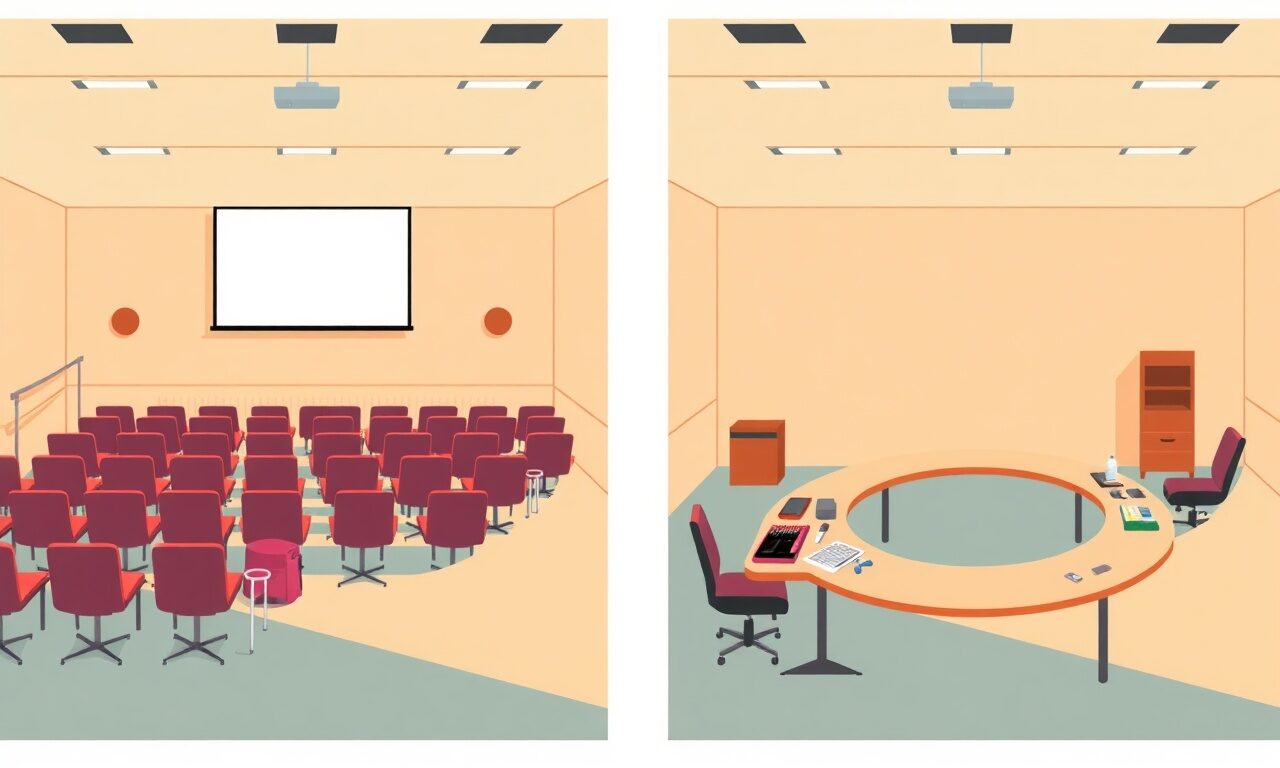
Every creator who's ever answered the same DM three times in one week eventually asks the same question: should I sell my time one hour at a time, or one room at a time? A 1:1 call and a group coaching session can pull from the exact same expertise, the exact same slides, even the exact same booking link — but they produce completely different numbers on your bank statement and completely different feelings in your inbox. One trades intimacy for a ceiling on your week. The other trades personal attention for a multiplier on your hour. Neither is universally right. What's right is whichever one matches the calendar you actually want to live inside six months from now.
The real math: revenue per hour, not price per session
The number that actually matters isn't your rate — it's what you take home per hour of your life spent delivering. Say you charge $250 for a 45-minute 1:1 strategy call. That's roughly $333/hour. Solid. Now say you run a 60-minute group coaching session for 10 people at $79 a seat. That's $790 for the hour — before you've even opened the possibility of a waitlist or a recording upsell. The 1:1 client got more of you. The group client got less of you but paid a fraction of the price, and you made more than double per hour worked. Neither number is fake; they're just measuring different things. If your goal is maximizing income per hour worked, group coaching almost always wins once you clear roughly 4-5 paid seats in a session.
| Factor | 1:1 Calls | Group Coaching |
|---|---|---|
| Typical price | $150–$500 per session | $29–$150 per seat |
| Revenue per hour (example) | ~$300–$400 | ~$600–$1,500+ |
| Prep time per session | Low, mostly reactive | Higher, but reused every cohort |
| Client intimacy | Very high, fully personalized | Moderate, shared attention |
| Scalability | Capped by your calendar | Capped by room size, not you |
| Best for | High-ticket, complex, sensitive problems | Repeatable frameworks, common questions |
| Client commitment needed | High willingness to pay | Lower barrier, easier first yes |
What 1:1 calls are actually good for
1:1 calls aren't just "the expensive option" — they solve a problem group formats structurally can't: situations where the answer genuinely depends on one person's specific context. A creator asking "should I niche down into skincare or stay general" needs to talk through their actual audience data, their actual content history, their actual risk tolerance. That's not a group question; it's a one-on-one diagnosis. 1:1 also builds the deepest trust and the highest lifetime value per client — someone who pays $300 for your undivided attention is far more likely to buy your next course, your next bundle, your next anything, because they've already experienced you delivering results for them specifically.
The catch is obvious once you've run 20 of them: your income is hard-capped by hours in a week, and every call carries emotional weight that a recorded lesson never will. Cancellations, time zone juggling, and the mental reset between very different client problems all eat into a day faster than people expect. If you're building your first paid offer, a small batch of 1:1 calls is still one of the fastest ways to validate that people will actually pay you — you just don't want it to be the only lever you ever pull.
What group coaching is actually good for
Group coaching shines wherever the question repeats. If you've answered "how do I price my first digital product" in a DM more than three times this month, that's not a 1:1 problem anymore — that's a curriculum. Group format lets you teach the 80% that's common to everyone once, live, with energy and real-time Q&A, while reserving your actual 1:1 time for the 20% that's genuinely unique to each person. It also does something 1:1 rarely does: it builds community. Peers answering each other's questions, sharing wins in the chat, holding each other accountable between sessions — that's retention gold that a private call can't replicate.
Prep time: the cost nobody puts in the spreadsheet
Here's where the math gets more honest. A 1:1 call often needs almost no prep beyond glancing at a client's form answers five minutes before the call — the conversation writes itself in real time. A first group session can take three or four hours to build properly: slides, a workbook, a clear session arc, anticipated questions. That's real cost, and it's the reason a lot of creators try group coaching once, find the first cohort exhausting to prepare, and quietly go back to 1:1.
But that prep is a one-time tax, not a recurring one. Session two of the same cohort structure takes a fraction of the time to prep, because you're refining, not building from scratch. Run the same group framework for a third or fourth cohort and your prep time can drop close to zero while the seats keep selling. 1:1 prep time never compounds the same way — every new client is a fresh blank page, no matter how many calls you've run before.
Decide which one to build first
0/6The sequencing move most creators miss
You don't have to choose forever — you choose an order. The pattern that works best for most creators: sell 1:1 calls first, because they're the fastest way to prove people will pay and to learn exactly which questions come up most. After five to ten calls, you'll notice a pattern — the same three problems keep showing up. That pattern is your group coaching curriculum, already field-tested on paying clients. Now you launch group coaching not as a guess but as a proven format, price it accessibly, and let 1:1 calls become your premium, limited-availability offer for people who want more than the group can give. Selling both side by side on store.fan means you're not forcing every visitor into one price point — someone hesitant to pay $300 might happily pay $59 for a seat in your group session, and love it enough to book the 1:1 next month.
The group format didn't replace my 1:1 calls — it became the funnel that fills them.— a creator who runs both on their storefront
Setting it up without adding admin work
The operational side is where a lot of this idea dies before it starts — nobody wants to manually chase payments, send Zoom links, and track who paid for which cohort in a spreadsheet. This is exactly what a proper storefront is for. On store.fan, both call types and group sessions can be listed and sold from your one link, with instant automatic delivery — the buyer gets their booking or meeting link on-screen and by email the second they pay, whether they connected Stripe or just added a PayPal email. Apple Pay and Google Pay work automatically at checkout too, which matters more than people expect: a coach charging $59 for a group seat loses real conversions to friction, and a one-tap payment closes that gap. You can also add custom checkout fields to collect a client's goal or time zone before the call, so you show up prepared without a single extra email exchange.
Once both offers are live, your customer list and built-in inbox make the sequencing move practical instead of theoretical — you can see exactly who bought a 1:1 call, send a broadcast campaign email inviting them to the next group cohort at a founding-member price, and reply to questions without leaving your dashboard. If you want to see how a real creator lays out multiple offer types on one page, a live example store is worth studying before you build your own.
Ready to sell 1:1 calls and group coaching from the same link, with instant delivery on both?
Start freeYes — you can list both as separate products on your one store.fan link, each with its own price, description, and checkout, so visitors choose the format that fits their budget and need.
Delivery is automatic: after checkout, the buyer sees their access details on-screen immediately and also receives them by email, whether it's a booking link for a 1:1 call or a join link for a group session.
Many creators set a floor of around 4-6 paid seats before confirming a cohort, so the math stays worthwhile even on a slower launch. You can always refund and reschedule if a session doesn't hit minimum.
You can start on the free plan to test demand. Check pricing for how the paid plans compare, including the 0% platform fee tiers once you're consistently selling.
Launch a small batch of 1:1 calls first to learn the repeat questions, then package those into a group session. If you're stuck on setup, common questions and contact support can help, and the blog has more guides on structuring coaching offers.
The bottom line
There's no universal winner between 1:1 calls and group coaching — there's only the winner for where you are right now. If you need to prove your expertise converts into paying clients and you have more hours than momentum, start with 1:1. If your inbox is already full of the same three questions and your hours are the scarce resource, group coaching will out-earn you per hour almost every time. The creators who build real income don't pick a side and defend it forever — they let 1:1 calls surface the curriculum, let group coaching scale the income, and let both live on one storefront so no visitor ever has to go looking for a second link to pay them.
Turn your knowledge into income
Launch your Store.Fan in minutes — sell digital products, courses, and calls straight from your bio. Free to start.