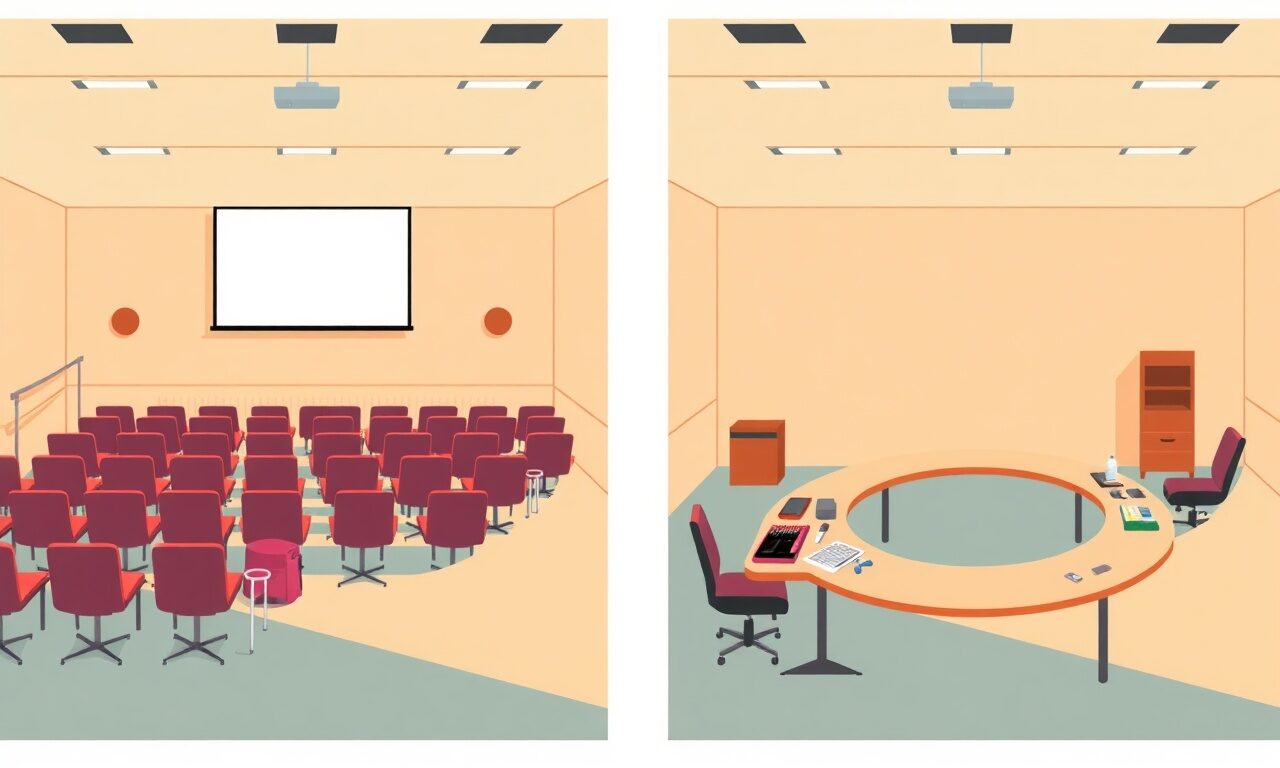
Async Critique Services: How Freelancers Sell Paid Feedback Without a Single Call
Trade your calendar for a checkout link — build a paid review service that runs entirely on file uploads and email delivery.
A resume reviewer who charges $75 an hour can only ever have as many good weeks as their calendar has open slots. A resume reviewer who sells a fixed, async "48-hour turnaround critique" for $75 can sell that same product to fifty people in one afternoon, deliver every single one on their own schedule, and never once say the words "does Tuesday at 2pm work for you." Feedback-based freelance work — design critiques, copy edits, resume reviews, portfolio teardowns, pitch-deck notes — is one of the easiest service categories to productize, because the actual deliverable was never the call. The call was just the (expensive, hard-to-scale) container you were putting the feedback in. Strip the container out, replace it with a file upload and a document back, and you've built a business that runs while you sleep.
Why calls are the wrong container for feedback
Think about what actually happens in a 30-minute "resume review call." You read the resume beforehand (or, more honestly, skim it in the first two minutes while making small talk). You talk through your notes out loud. The client scribbles some of it down, forgets half of it, and asks if you can "just send that over in writing" afterward anyway. The call didn't add information — it added scheduling friction, time zone math, a no-show risk, and a hard ceiling on how many clients you can serve per week. Written, async feedback is not a downgrade from a call. For most critique work, it's strictly better: the client can re-read it, forward it to a hiring manager, paste your notes into a doc, and act on it at 11pm without needing you present. You're not cutting a corner by going async — you're removing a step that was never load-bearing in the first place.
Designing the product: turnaround time is your price
Once feedback becomes a file instead of a conversation, the thing you're actually selling is a promise about time: "you'll have my written notes within 48 hours of submitting." That promise is what justifies the price, and it's what makes the product feel premium instead of like a slow email exchange. Pick a turnaround window you can hit even on a busy week — 48 or 72 hours is realistic for most solo freelancers — and treat it the way you'd treat a shipping date on a physical product: sacred. Missing it once is a bad review; missing it consistently kills the whole model, because the entire pitch is reliability, not brilliance. If you want to offer a faster option, sell it as a separate, higher-priced tier ("24-hour rush review") rather than quietly speeding up for people who ask nicely — the moment turnaround becomes negotiable, it stops being a feature you can price.
| Tier | What's included | Illustrative price | Turnaround |
|---|---|---|---|
| Quick Pass | High-level notes on structure, clarity, and 3 biggest fixes | $29 | 72 hours |
| Full Critique | Line-by-line annotated document + summary + priority action list | $79 | 48 hours |
| Critique + Rewrite | Everything in Full Critique, plus a rewritten version of the weakest section | $149 | 48 hours |
| Rush Add-on | Bumps any tier to 24-hour delivery | +$40 | 24 hours |
Replacing the discovery call with checkout fields
The one real job a call used to do was gather context: what is this for, who's the audience, what's the deadline, what have you already tried. All of that is information, not conversation — and information belongs on a form, not in a meeting. This is exactly what custom checkout fields are for. Instead of booking a call to ask "what's this resume for" and "do you have a job posting link," you build those questions directly into the checkout: a link field for the file (Google Doc, Figma, PDF, whatever fits the medium), a short-text field for context ("applying for X role, want to emphasize Y"), and an optional field for a deadline if it's tighter than your standard window. The buyer answers once, at the moment they're already paying attention and already paying you, and you get a complete brief attached to every single order without chasing anyone for it afterward.
- 1File/link field (required): a shareable link to the doc, deck, portfolio, or design file — set the field description to specify exactly what access level you need (e.g. "comment access" for a Google Doc).
- 2Context field (required): a short-answer field prompting for the goal ("what's this for, who's the reader/viewer") so you're never critiquing blind.
- 3Focus area field (optional): a dropdown or short text for what they most want notes on — this alone cuts your review time because you're not guessing what matters to them.
- 4Deadline field (optional): only needed if you allow tighter-than-standard requests; otherwise your fixed turnaround applies automatically.
A checkout form with three good questions gathers more usable context than a 20-minute call, because nobody's performing for you — they're just answering.— store.fan team
Delivering the critique without ever opening a calendar
Delivery is the part freelancers overthink. You don't need a client portal or a project management tool for this — you need one document per order and a way to get it back to the buyer securely. Write your critique directly into a copy of their file (comments in a Google Doc, annotations layered onto a design export, tracked changes in a Word file) or as a standalone PDF if you're working from a link, then attach that file as the delivered digital product. Because store.fan handles instant automatic delivery, the buyer gets a secure download link the moment you've uploaded the finished file to their order — no separate email thread, no "here's the Dropbox link" message that gets buried, no back-and-forth about whether it arrived. You write, you upload, it's delivered — and both of you have a permanent record of what was sent and when.
Async critique service setup checklist
0/7Pricing three ways without building three workflows
The tiering table above isn't just a menu — it's a way to serve a wider range of budgets using one skill and one process. A student paying $29 for a quick pass and a senior designer paying $149 for a critique-plus-rewrite are both filling out the same checkout fields and both getting a document back within your same turnaround window. The only thing that changes is depth: a quick pass might be 15 minutes of focused notes on the three biggest issues, while a full critique is a genuine line-by-line pass. You're not building a different business for each price point, you're offering different amounts of your time against the same underlying service — which is exactly how a solo freelancer scales pricing without needing to invent three separate products from scratch.
It's worth being honest about where this model breaks down: it only works for feedback that's genuinely useful in writing. If your value is really in reading someone's tone of voice out loud, coaching them through a mindset block, or negotiating in real time, that's a coaching call, not a critique, and store.fan's 1:1 coaching call product type is the better fit for that — sell it alongside your async tiers rather than instead of them. Plenty of successful freelancers run both: async critiques as the volume product, live calls as the premium add-on for people who want to talk it through afterward. If you haven't set up a storefront yet, start free and list both product types under the same link so buyers can choose the format that fits them.
Where this fits in your storefront
None of this needs a separate website, a scheduling tool, or a client portal — it needs one link. Your critique tiers live as products on your store.fan page, right alongside any templates, guides, or courses you already sell, so someone who lands on your one link from Instagram or LinkedIn sees the full range of what you offer in one scroll. If you're already freelancing and just haven't productized the feedback side yet, that's the gap worth closing first: it's the lowest-effort digital product you can build, because you're not creating new content, you're packaging a skill you already use every day. Check pricing to see what's included at each plan level, including custom checkout fields and 0% platform fees on paid plans, and look at a live example store to see how a creator lays out multiple product types on a single page without it feeling cluttered.
Build that into your context field upfront — ask for enough detail (goal, audience, specific concerns) that follow-up questions are rare. If one still comes up, a single clarifying message is fine; the model breaks down if every order turns into a back-and-forth thread, which is exactly what checkout fields are meant to prevent.
No — delivery is handled the same way as any other digital product: once you upload the finished critique to the order, the buyer gets a secure download link automatically, on-screen and by email. There's no separate system to build or maintain.
You add the fields directly to a product from your dashboard — file/link, short text, dropdown, whatever fits — and they appear right in the checkout flow before payment. The buyer's answers get attached to that specific order, so you see exactly what they submitted the moment the sale comes through. Check the FAQ for setup specifics.
Yes, and many freelancers do — list it as a separate coaching-call product at a premium price for buyers who want to talk through the feedback live. The async tiers stay as your scalable core offer; the call becomes an optional upsell, not the default delivery method.
Start closer to the lower end of your tiering (illustrative examples above run $29-$149) and raise prices once you have a handful of completed reviews and testimonials to point to. Underpricing your first ten orders to build proof is a much smaller risk than overpricing before you have any track record at all.
The freelancers who make this work aren't necessarily better critics than the ones still doing calls — they've just removed the one piece of the process that was capping their income without adding value. If a question comes up while you're setting up tiers or checkout fields, contact support directly, and browse the blog for more playbooks on turning a service skill into a real product line inside store.fan.
Package your feedback skill into a fixed-price, async product and stop trading hours for reviews.
Start freeTurn your knowledge into income
Launch your Store.Fan in minutes — sell digital products, courses, and calls straight from your bio. Free to start.