Best Day, Best Time: Using Your Analytics History to Plan Your Next Product Drop
Your past sales data already knows the best day to launch, you just haven't asked it yet.
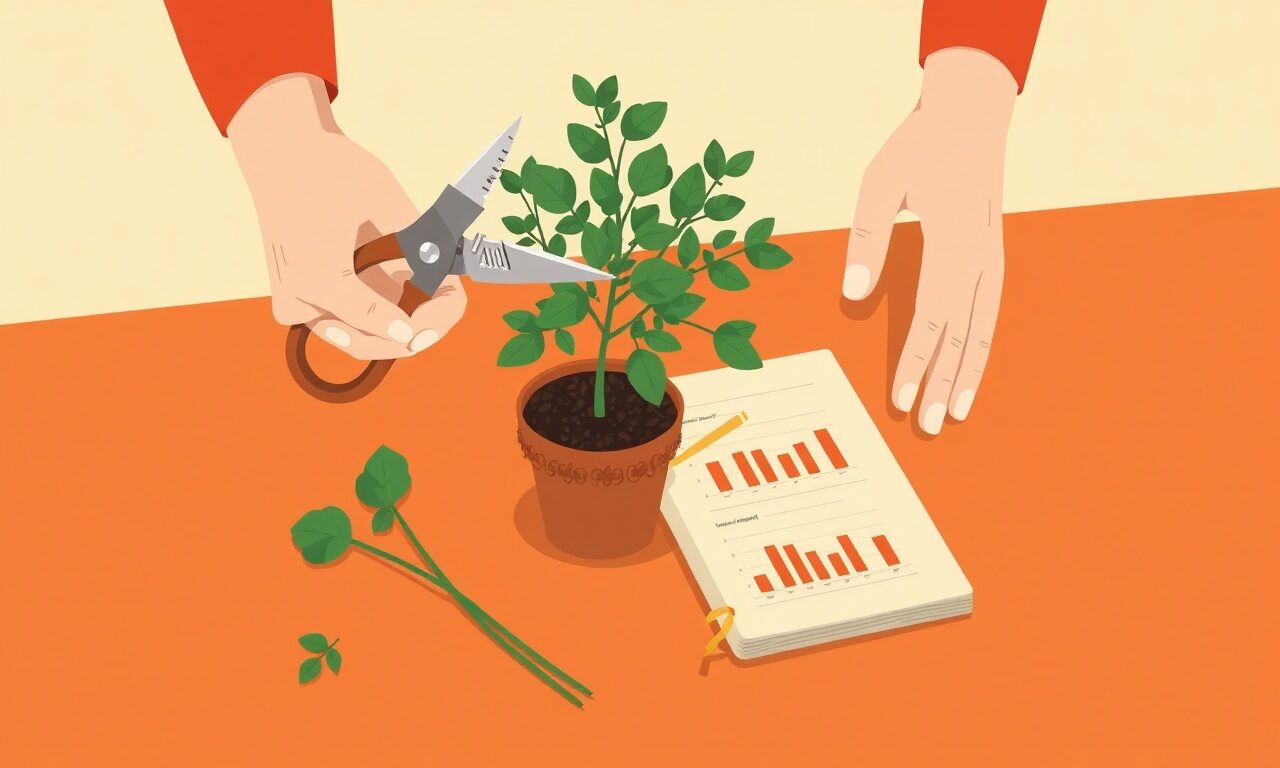
Most creators pick a launch day the same way they pick a lunch spot: whatever feels right. Tuesday seems fine. Maybe Friday, everyone's in a good mood. But you're sitting on a dataset that already answers this question with actual evidence, not a vibe. Every view, click, and sale your store has logged carries a timestamp, and those timestamps form a pattern specific to your audience, your niche, and your time zone. The creator who launches on the day their own history says is strongest isn't guessing better, they're reading a report the rest of us are ignoring.
Why 'best practices' timing advice keeps failing you
Every generic guide says the same thing: post Tuesday-Thursday, launch mid-morning, avoid weekends. That advice is averaged across millions of accounts with wildly different audiences, and averages flatten the exact patterns you need to see. A fitness coach whose followers scroll during a 6am workout break has a completely different rhythm than a Notion template seller whose buyers are procrastinating at their 2pm desk job. The only dataset that reflects your actual audience is the one sitting in your own store.
This isn't a small distinction. A creator selling coaching calls to night-shift nurses found her sales clustered between 11pm and 1am, the opposite of every 'best time to launch' list she'd read. Once she moved her drops to 10:30pm instead of 10am, launch-day conversion roughly doubled. Generic advice would have had her launching into dead air every time.
Two patterns, not one: traffic timing vs. buying timing
The single biggest mistake creators make when they finally look at their data is treating when people show up and when people pay as the same thing. They're usually not. Traffic often spikes right after you post, say 8am when you're most active online. But purchases, especially anything over $20, tend to cluster later, once someone's had time to think or check their bank balance. Launch based on pageview timing alone and you're optimizing for the wrong moment.
| Signal | What it tells you | How to use it |
|---|---|---|
| Pageview spikes | When your audience is scrolling and clicking your bio link | Best time to post the announcement or teaser |
| Checkout starts | When people are seriously considering buying | Best time to send a reminder or urgency nudge |
| Completed sales | When money actually moves | Best time to open the cart or flip a product live |
| Day-of-week totals | Which day consistently outperforms others | Best day to schedule the actual drop |
Pulling the numbers: a simple audit you can do this week
You don't need a data science degree, you need about 30 minutes and three months of history. Start with whatever timestamps your store already tracks, then layer in deeper detail if your plan has it.
- 1Pull your last 90 days of order timestamps and sort them by day of week, you're looking for which day shows up most often, not just the single biggest day
- 2Separately sort by hour of day (converted to your audience's primary time zone, not yours, if they differ), then look for the two or three hours where sales cluster
- 3Cross-reference against what you were actually doing that day, a spike on a random Wednesday might trace back to a story mention from another creator, not the day itself
- 4Repeat the same sort for pageviews or link clicks if you have that data, and compare the gap between traffic peak and sales peak
- 5Write down your top day and your top 2-hour buying window someplace you'll actually see again, a sticky note beats a forgotten spreadsheet tab
If you're on the Pro plan, connecting Google Analytics adds the hourly and source-level breakdown basic order timestamps can't: which day drives the most sessions, and which referral source (a platform, a story, an email) is actually converting versus just generating idle traffic. That extra layer turns a decent guess into a confident one.
Building your launch calendar from the pattern
Once you've got a top day and a top window, don't launch once and call it solved, build a repeatable calendar around it. Treat your best day like a standing appointment: new products, price drops, and limited-time bundles get scheduled to open during that window by default. This is where a broadcast email to your customer list earns its keep, send it 15-30 minutes before your historical buying window opens, not the moment you publish the product, so the message and the purchase impulse land together instead of the email going stale for six hours before anyone's in a buying mood.
Your data-backed launch checklist
0/6You don't need more traffic to launch better, you need to launch into the window your own customers already told you they show up for.
Watch for seasonal drift, your pattern isn't permanent
A pattern built in March can quietly shift by August, especially if your audience skews toward students or anyone on a school-year schedule. Re-run your day-of-week and hour-of-day sort every quarter rather than assuming last spring's winning Thursday still holds. It matters even more around big shopping periods: a Black Friday audience often buys earlier in the day, actively hunting for deals. Treat your launch calendar as a living document, not a one-time discovery.
It's also worth separating new-customer timing from repeat-customer timing. Existing buyers on your list tend to act fast, often within the first hour of an email, because trust is already built. First-time visitors need more of that 2-4 hour consideration lag. If a launch mixes both audiences, don't be surprised by two distinct bumps in the sales chart instead of one clean peak, that's expected, not a red flag.
Why this only works if you actually have a store collecting the data
None of this analysis is possible without a storefront that actually logs every visit and sale in one place. If your links are scattered across a bio, a few checkout tools, and a DM-based sales process, there's no unified timestamp history to mine, just fragments you'd have to reconstruct from memory. That's the quieter case for consolidating everything into one link: it's not just cleaner, it's the only way to build a real dataset about your own business over time. If you haven't yet, this is a good reason to open your store.fan and let every click and sale log automatically from day one.
Once it's running, the store designer, discount codes, and campaign emails all become tools you can point at your actual pattern instead of a guess. Schedule a limited bundle to go live right as your historical window opens, then send the announcement through your customer list at the moment you know they're most likely to act. If you want to see what a fully built-out storefront looks like, a live example store is worth a look before you build your own.
Start logging every visit and sale in one place so your next launch is backed by your own data, not a guess.
Start freeAim for at least 90 days and ideally two full sales cycles if you launch periodically. A single good week can be a fluke, a repeated day-of-week pattern across three months is a real signal worth planning around.
Launch on general best-practice timing for your first cycle, but start logging from day one. By your second or third drop you'll have enough real data to override the generic guess with your own pattern.
Yes, especially for an international audience. A launch that looks 'best' in your local time can land at 3am for a meaningful slice of your buyers. Convert your peak window to where the bulk of your audience lives before locking in a schedule.
Basic order timestamps are enough to find your top day and rough buying window. Google Analytics on the Pro plan adds hourly granularity and traffic-source detail, but it's a refinement, not a requirement to start.
Check the blog for more guides on launches and analytics, and the FAQ for common questions. If something looks off in your numbers, contact support directly rather than guessing.
Next time you're staring at a blank launch date, skip the coin flip. Pull your last three months of history, find the day and window your audience already votes for with their wallets, and build the drop around that instead of a hunch. store.fan is already logging the data that makes this possible, all it needs is you to actually look.
Turn your knowledge into income
Launch your Store.Fan in minutes — sell digital products, courses, and calls straight from your bio. Free to start.