The 90-Day Pro Upgrade Case Study: Real Numbers From a Creator Who Made the Switch
One creator's actual before-and-after sales data, three months after ditching the free plan.
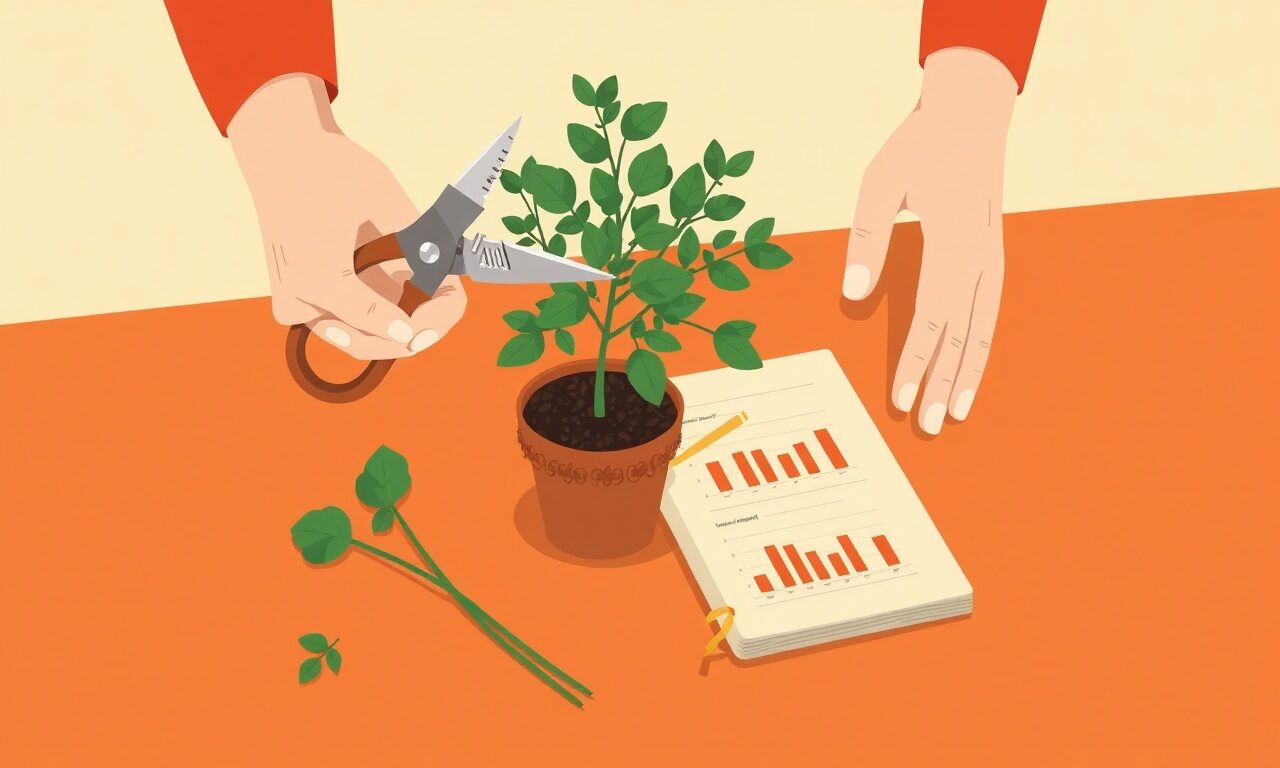
Most upgrade decisions get made on vibes. A creator squints at a plan comparison page for four minutes, then either upgrades on impulse or closes the tab and forgets about it for six months. This isn't that. This is one creator's actual day-by-day trajectory across 90 days on store.fan — before the free plan, the week she upgraded, and what changed in the numbers after. No hypotheticals. Just a timeline you can hold up against your own store and ask: am I past the point where the free plan is quietly costing me money?
Week 1-4: what the free plan looked like in practice
Rae had been selling a set of Notion planning templates for about five months before this case study starts. She was on the free plan the entire time, which is exactly how it should work — start free, prove people will actually pay for what you're making, and don't overthink the plan question before you have real sales data. In the first four weeks of this window she made $412 across 19 orders, almost all of it from a single TikTok that kept resurfacing in the algorithm. That's a healthy number for a side project. It's also the exact revenue level where a percentage-based fee stops being a rounding error and starts being a real line item every month.
She wasn't unhappy with the free plan on a feature level. Checkout worked, delivery worked, buyers got their files instantly. What she didn't have was any way to see her buyer list as a group, run a discount code, or message everyone who'd bought from her. Those gaps don't cost anything at 19 orders. They start costing real money once the order count climbs, because every buyer is a person you can't easily reach again.
The week everything tipped
In week 5, that same TikTok got picked up by a bigger creator's duet and Rae's traffic jumped roughly 6x overnight. Orders that week: 61, more than triple her previous best week. This is the moment worth paying attention to, because it's exactly when the free-plan math flips from 'fine' to 'expensive.' A per-transaction fee that felt invisible at $412 a month becomes very visible at $1,400 in a single week — it scales right alongside her best week ever, taking a bigger bite every time she succeeds. That's what sent her to the pricing page for the first time.
What changed the week she upgraded
Rae upgraded to Pro on day 34. Paid plans on store.fan run 0% platform fees, so the first and most mechanical change was that every dollar of that viral week's sales stayed hers instead of a slice going to fees. But the fee change is the boring part of this story. The interesting part is what she did with the tools that came with it.
| Capability | Free plan | After upgrading |
|---|---|---|
| Platform fees on sales | Percentage taken per order | 0% — she keeps the full price |
| Buyer/customer list | Not visible as a group | Full list, exportable, searchable |
| Discount codes | Not available | Ran a 20%-off bundle code in week 7 |
| Broadcast emails | Not available | Sent 3 campaigns to past buyers over 90 days |
| Analytics | Basic order count | Google Analytics connected, saw traffic sources |
| Custom checkout fields | Not available | Added a 'which template first?' field for onboarding |
The customer list was the one she used immediately and kept using. Once she could see every past buyer in one place, she put together a simple bundle — three templates she'd normally sell separately, packaged at a small discount — and emailed it to everyone who'd bought from her in the previous four months. That campaign, sent in week 7, brought in $340 from people who had already paid her once. That's not new-audience revenue. That's revenue that was sitting in a list she couldn't previously see.
Day-by-day: the 90-day sales curve
- 1Days 1-28 (free plan): $412 total, 19 orders, one product, no repeat buyers reachable.
- 2Days 29-34 (viral spike, still free): $1,180 in six days, 61 orders — the week that exposed the cost of staying free.
- 3Day 34: upgraded to Pro plan, set up the customer list and connected FAQ-recommended Google Analytics the same afternoon.
- 4Days 35-49 (weeks 6-7): $610 in new sales, plus the $340 bundle campaign to past buyers.
- 5Days 50-70 (weeks 8-10): steady $95-140/week from organic traffic, now trackable by source through Analytics.
- 6Days 71-90 (weeks 11-13): launched a second product using a discount code for early buyers, closing the 90 days at $2,180 cumulative for the period.
Total for the 90-day window: $2,180, against $412 in the first four weeks alone, before the spike, before the upgrade, before any repeat-buyer tactics. The upgrade paid for itself inside the first two weeks purely from fee savings on the spike traffic — everything from week 7 onward compounded on top of a decision that had already broken even.
I didn't upgrade because I read a feature list. I upgraded because I did the math on one good week and realized the free plan was going to cost me more the better I did.— Rae, template creator
Would this work if you're not viral yet?
The honest answer is that the spike accelerated Rae's decision, but the underlying math applies at any volume once you're making consistent sales. The free plan is genuinely the right call while you're validating an idea — nobody should pay for tools before they know people will buy. The upgrade math starts to favor Pro the moment two things are true: you're selling regularly enough that the fee is a real number, and you have buyers worth reaching a second time. If you're only making one or two sales a month, keep the free plan and put your energy into the offer itself. If you're making sales every week, run the numbers the way Rae did — multiply what a percentage fee would have taken out of it, and compare that to what a customer list, discount codes, and broadcast emails could generate from the same buyers.
Run your own version of this before you upgrade
0/5What she'd do differently
Rae's one regret, in her words, was waiting for a viral spike to force the decision instead of upgrading two weeks earlier when her weekly sales had already crossed a comfortable threshold. The customer list and email tools would have been in place before the spike hit, meaning that first bundle campaign could have gone out the same week as the traffic surge instead of two weeks later. If you want to see what a fully built-out store with these tools looks like in practice, a live example store is worth studying before you commit either way — you'll notice the store design, the product mix, and the checkout details all working together, not just the pricing plan underneath them.
There's no fixed number, but a useful gut check is whether a percentage fee on your best recent week feels like real money or pocket change. If it feels real, the math already favors upgrading. See plans for the specifics.
Platform fees on paid plans drop to 0%, and you get access to tools like the customer list, discount codes, broadcast emails, and Google Analytics — nothing about your existing checkout or delivery setup changes.
Yes, plan changes aren't locked in. If you're unsure, contact support before deciding, or check the common questions page for specifics on how billing and downgrades work.
In this case study it was the single highest-leverage feature — the bundle email to past buyers alone outperformed several weeks of new organic sales, because those buyers already trusted her.
Inconsistent sales are exactly when a repeat-buyer list and a discount code matter most — they let you generate a predictable week out of an already-proven audience instead of waiting on the next unpredictable spike.
See your own numbers side by side and decide for yourself — it takes minutes to compare.
Compare plansNinety days isn't long enough to prove a universal rule, and Rae's spike week isn't going to repeat for everyone. But the pattern underneath it holds up: the free plan is the right starting point for every creator, and the moment sales become consistent enough that fees are a real number and buyers are worth reaching twice, the math tips. If you haven't started at all yet, that's step one regardless of plan — open your store.fan and get a real product in front of real buyers before you optimize anything else. And if you want more numbers-driven breakdowns like this one, the blog has more guides on exactly this kind of decision.
Turn your knowledge into income
Launch your Store.Fan in minutes — sell digital products, courses, and calls straight from your bio. Free to start.