What a notary’s appointment-preparation guide saves customers
Connect a digital guide’s value to fewer missing documents, clearer questions and better use of appointment time.
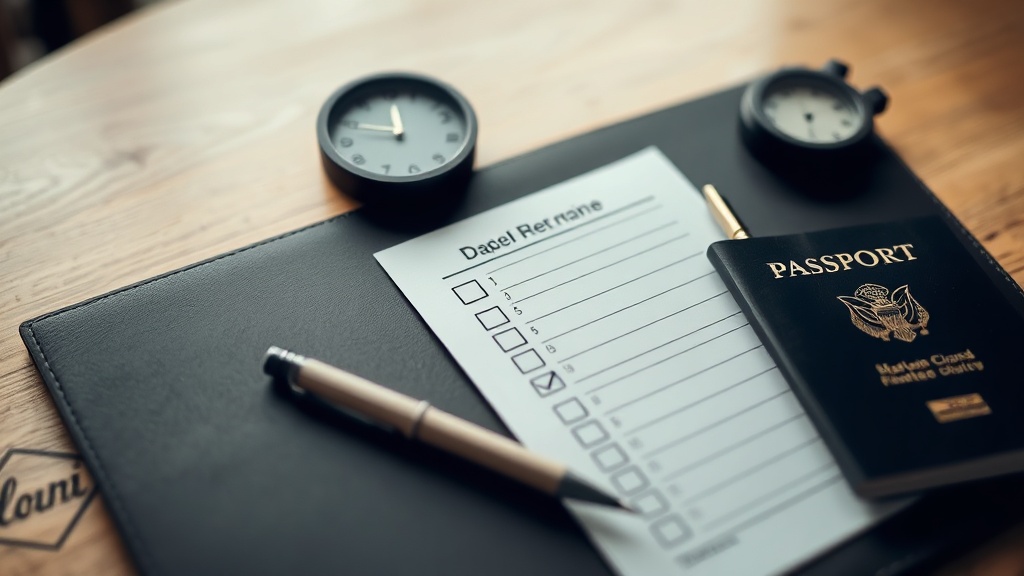
A customer arrives at your notary appointment with a passport, three questions and no idea whether the form needs a witness. You spend the first part of the meeting sorting papers, explaining basic terms and finding out what they meant to bring. By the time you reach the part that needs your judgement, the clock is already doing the talking. An appointment-preparation guide can move much of that work earlier, while there is still time to read it properly.
The time you are really saving
The obvious saving is minutes spent answering questions that could have been covered before the appointment. The less obvious saving is attention. When a customer has already checked their documents and written down the facts that matter, you can spend more of the meeting on exceptions, choices and work that requires you.
This does not mean every appointment becomes shorter. A customer may still need the same amount of professional care. The change is in how that time is used. Instead of repeating the same orientation each time, you give customers a consistent starting point and reserve the meeting for applying your knowledge to their circumstances.
What a useful guide includes
- 1A plain-language description of the appointment. Explain what will happen first, what the customer should expect to discuss and what you will not be able to decide for them.
- 2A document checklist with specific labels. “Bring identification” is less useful than naming the accepted identification you actually ask customers to provide, where appropriate.
- 3A preparation worksheet. Give the customer spaces to record names, dates, addresses, relevant deadlines and the questions they want answered.
- 4A section on common gaps. Explain what happens when a document is missing, a name does not match or a form has been signed too early. Describe the next step without promising an outcome.
- 5A final check before arrival. This can cover document condition, copies, signatures, payment arrangements and any information the customer needs to send in advance.
| Customer problem | Guide element | Effect on the appointment |
|---|---|---|
| They do not know which papers matter | Named document checklist | Less time spent identifying basic requirements |
| They forget the point of the appointment | Short preparation worksheet | A clearer opening conversation |
| They expect you to complete work outside your role | Scope and boundaries section | Fewer mismatched expectations |
| They arrive with a preventable gap | Final pre-arrival check | A better chance to spot the gap before the meeting |
Why clearer questions have a commercial value
Customers do not only pay for the document they receive or the signature they obtain. They pay for a process that helps them move forward with less confusion. A guide makes that process visible before the appointment, which gives you something concrete to sell beyond a block of time.
It also helps customers distinguish between information and professional work. Your guide can explain terminology, preparation and the shape of the meeting. The appointment can then deal with the customer’s actual situation, within the limits of your role and applicable rules. That distinction is useful because it reduces the temptation to make a broad promise such as “come along and I will sort everything out”.
Three ways to package the guide
You can sell the guide on its own as a modest first purchase. This suits customers who want to understand the process before deciding whether to book. A digital download is simple to deliver, and you can point readers towards an appointment when they are ready. store.fan supports digital downloads, so the file can sit beside your appointment offer rather than being sent manually from your inbox.
You can also include the guide with a booking. In that case, the guide is not a separate product so much as preparation that protects the value of the meeting. Make the distinction clear on the sales page: the guide helps the customer prepare; your appointment provides the professional service.
A third option is a small preparation package: the guide, a document check before the appointment and the appointment itself. This only works if the extra review has a defined scope. For example, you might check whether the listed items appear to be present, without promising that an authority will accept them or giving advice outside your qualification.
How to make the guide earn its place
- Write down the repeated explanations from your last few appointments. Those are candidates for the guide, but remove anything that depends on a customer’s private facts.
- Use headings that answer a customer’s immediate question: “What should I bring?”, “What happens at the appointment?” and “What if something is missing?”
- Add a short question list at the end. Prompts are often more useful than another page of general explanation.
- Give the guide a version date and keep an editable source file. A guide that is difficult to update will eventually become a liability.
- Track the questions customers still ask. If the same point appears repeatedly, revise the guide rather than adding a longer reply to every email.
For delivery, keep the buying path short. A customer should be able to understand what the guide covers, pay, receive the file and find the next step without a separate conversation. On store.fan, money goes straight to your own Stripe account and store.fan takes 0% of sales, while Stripe’s own processing fee still applies. If you want to sell the guide alongside other services, a storefront can keep those choices in one place.
If the guide leads into a more involved service, you might turn the preparation material into a short course or a paid call. That is where hosted online courses or coaching calls can make sense, but only when customers need more than a reference document. More delivery formats also mean more maintenance, support and customer decisions.
What to measure after launch
Start with questions you can answer from your own work. How many customers bought or received the guide? Which questions still appeared before the appointment? How often did a customer arrive without a listed item? Did the appointment spend more time on the part that required your judgement? These observations tell you whether the guide is reducing friction, even if it does not make every meeting shorter.
You can also compare the guide’s role in your offers. If a standalone version is bought but rarely leads to appointments, it may be doing a useful educational job without being a sales path. If customers book but do not open it, the issue may be delivery, timing or the guide’s length. Put the guide in front of the customer when preparation is relevant, not merely because it exists.
Give it away when its main job is to help a suitable customer decide whether to contact you. Charge for it when it contains structured preparation that saves customers time or gives them a reusable reference. Test the role you want it to play rather than assuming free always means more useful.
Usually not. It can explain the process and help a customer organise information, but it cannot assess every circumstance or provide the professional work that requires your judgement. State clearly what the guide covers and what still requires an appointment or another qualified service.
Review it whenever your appointment process, accepted documents, fees or relevant requirements change. Even without a known change, a scheduled review helps you catch unclear wording and repeated customer questions. Show the version date so customers can tell which edition they have.
Put your preparation guide and appointment offer in one storefront with store.fan.
Start sellingTurn your knowledge into income
Launch your Store.Fan in minutes — sell digital products, courses, and calls straight from your bio. Free to start.