Why International Cards Get Declined (and How to Stop Losing Global Sales)
A fan in another country hits buy and their card just... fails — here's why that happens and how to win the sale anyway.
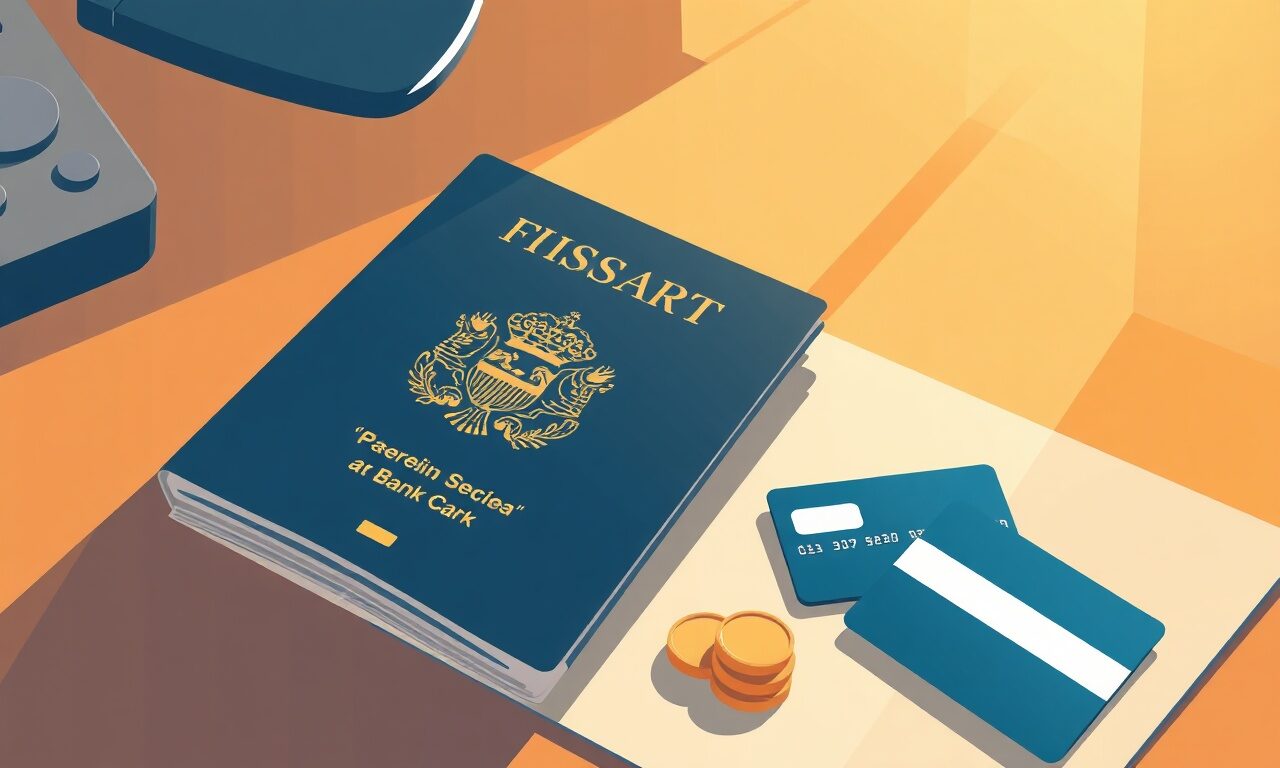
Someone in Manila watches your Reel at 2am, clicks your bio link, loves your $37 course, and taps buy. Ten seconds later: declined. Not because they didn't want it. Not because their card was maxed out. Their bank's fraud system saw a charge from another country, in a currency the card doesn't normally use, and decided the safest move was to say no. You never find out — you just see a checkout that didn't convert. If you sell to a global audience, which almost every creator does the moment content crosses a border, this happens more than you think.
This isn't a you problem or a product problem. It's plumbing — baked into how card networks and issuing banks decide, in a fraction of a second, whether to approve a charge. Once you understand the actual mechanics, not "international payments are risky" but the specific triggers that cause a decline, there's a lot you can do to route around them without touching a line of payment code.
The three real reasons a foreign card gets declined
"Card declined" is the message the buyer sees, but it's almost never the whole story — the decision happened inside the buyer's own bank, in a fraud-detection system that international purchases trip more often than domestic ones.
1. Currency and geography mismatch
A card issued in Brazil that's never seen a USD charge, from a merchant with no history with that cardholder, sitting outside the cardholder's home country, checks almost every box a fraud model is trained to flag. It's not that the bank thinks your storefront is a scam — that exact pattern (new merchant + foreign currency + no history) is statistically what a stolen card looks like when it's being tested. Legitimate buyers get caught in that net constantly.
2. 3D Secure friction (and the abandoned step)
In many regions — the EU under PSD2 rules especially, but increasingly elsewhere — banks require an extra verification step called 3D Secure: a one-time code by SMS, an app push, a biometric prompt. It reduces fraud, but it adds a step between "I want this" and "I have it." A buyer on unfamiliar wifi, or whose SMS is delayed a few minutes, drops off right there. The charge isn't technically declined — it's just never completed, which looks identical to a lost sale on your side.
3. Unfamiliar merchant, low transaction history
New and smaller merchants get scrutinized harder than big, recognizable brands, and that's amplified across borders because the bank has even less context. A buyer's bank has approved a hundred Amazon charges without blinking; it's seeing your storefront for the first time. That unfamiliarity alone nudges the risk score up, even when everything else is completely normal.
The fixes that actually move the needle
You can't rewrite a stranger's bank's fraud model, but you can change what it sees and give buyers a second path when the first attempt fails.
| Cause of the decline | What helps |
|---|---|
| Currency/geography mismatch reads as risky | A second rail (PayPal) so a flagged card isn't the only option |
| 3D Secure step gets abandoned mid-flow | Wallets often satisfy strong authentication automatically, no SMS step |
| Bank doesn't recognize you as a merchant | Clear, consistent branding in your store designer builds recognition over time |
| Manual entry errors compound fraud flags | Wallets remove typing entirely — no mistyped numbers to flag |
| Buyer gives up after one failed attempt | A visible retry that switches method, not re-enter everything |
Why wallets quietly fix more of this than you'd expect
Here's the part that surprises most creators: you're probably already sitting on the best fix. When a buyer checks out with Apple Pay or Google Pay — automatic on store.fan the instant checkout opens on a wallet-enabled device — the transaction isn't sent to the bank as a raw 16-digit card number. It's tokenized and device-verified, with biometric confirmation already baked in. That's exactly the kind of transaction fraud models trust more, because a fingerprint or Face ID scan already did verification work the bank would otherwise guess at. Fewer risk signals, fewer declines, and 3D Secure friction often gets satisfied invisibly instead of interrupting the buyer with a separate code.
That's also why PayPal earns its place as a second option, not a nice-to-have. In plenty of countries, a PayPal balance or linked funding source lets a buyer complete a purchase even when their card issuer is being stubborn about a foreign charge. Adding a PayPal email next to your Stripe connection takes a couple of minutes and gives international buyers a real alternative the moment a card fails — instead of a dead end.
Do this before your next international push
0/5A decline isn't a verdict on your product. It's a bank being cautious about a pattern it doesn't recognize yet — and there's almost always a second door.— store.fan team
Don't let a handful of markets talk you out of going global
It's tempting, after a few declined-card messages, to quietly stop promoting outside your home market. That's the wrong lesson. Cross-border commerce is a bigger share of creator revenue every year, and the creators capturing it aren't the ones with zero declines — they're the ones who've made it easy to try a second payment method instead of giving up. A follower in Jakarta or Lagos who wants your ebook is a real sale a few taps away; the only question is whether your checkout gives them a way through when the first attempt stumbles.
This is also where instant, automatic delivery pulls its weight. Once a payment clears — card, wallet, or PayPal — the buyer gets their secure download link, course access, or coaching call link immediately, on-screen and by email. That reliability matters even more for international buyers, who are often less trusting of an unfamiliar merchant to begin with; a delivery that works instantly is part of what makes the second attempt worth making. Setting it up costs nothing and doesn't touch your pricing — compare that against quietly losing a slice of every international launch to a decline nobody complains about, and it's not a close call.
Add a second payment method today and stop losing international buyers to a single declined card.
Start freeWhat good looks like in practice
Picture a course creator running a launch week promo to a mixed US/EU/Southeast Asia audience. Stripe handles the bulk of card traffic cleanly, wallets absorb mobile checkouts with fewer 3D Secure interruptions, and the PayPal email catches the remainder — buyers whose card networks were never going to cooperate no matter how clean the checkout was. None of that requires understanding fraud scoring; it requires one thing: more than one path to payment before the traffic shows up. A live example store shows what that setup looks like once it's live.
Almost always the issuing bank's fraud model reacting to a foreign currency, an unfamiliar merchant, and no purchase history — not a problem with your storefront or Stripe connection.
Yes — PayPal can route around card network fraud checks entirely, since the buyer may pay from a balance or linked account instead of a raw card number. It's a quick addition alongside Stripe.
Card networks already handle that through fraud scoring and 3D Secure, which is precisely why legitimate buyers sometimes get declined. Your job is giving a false decline a second path to complete, not adding more scrutiny.
They reduce real triggers — tokenized, device-verified transactions look less risky than a typed card number, and can satisfy strong authentication without a separate SMS step. They work automatically wherever the buyer's device supports them.
Start with common questions, and reach out to contact support for a specific declined transaction or payout question.
Global reach is one of the quiet advantages of a link-in-bio storefront — your bio link works the same whether the click comes from Chicago or Cape Town. These mechanics are about making sure that reach actually converts into completed, delivered sales instead of stopping at a bank's fraud filter. For more on turning traffic into paid customers, check the blog — store.fan remains the one link doing the work behind all of it.
Turn your knowledge into income
Launch your Store.Fan in minutes — sell digital products, courses, and calls straight from your bio. Free to start.